How much does custom software cost?
Custom software has no price list, because it is not a product: two businesses that both want 'an order system' can need very different things once roles, documents and connections to other tools are on the table. Here you have our starting price, the factors that set the scope, when buying off the shelf is the better call, and how a quote is built so that it holds.
Web apps and platforms start from €3,000 with us. Custom software with several modules, roles, data migration and integrations is quoted at a fixed price after one call. Four things move the price: modules and roles, documents and integrations, moving data out of spreadsheets or an old system, and maintenance. The written quote arrives within two working days, the first working version within 4 to 6 weeks, and we do not bill by the hour.
Why hardly anyone publishes prices, and what we publish
The usual reason is true: the scope of custom software varies enormously from one business to the next. But you cannot budget with 'it depends'.
So we publish our starting price and, line by line, what raises the scope. The exact figure always comes the same way: one call where we look at how the business runs and at your real forms, then within two working days a written quote with a total that holds.
Starting price and scope
The table shows where the starting price is enough and where a project becomes its own quote. The middle column matters most: it is what you can check any quote against, ours included.
| Project | What is in it | Price |
|---|---|---|
| A small tool for one job | One form, one list, one or two roles, no data migration and no integrations | From €3,000 |
| A web app with accounts | User sign-in, roles, an admin panel, payments or bookings | From €3,000 |
| A mobile app from one codebase | One app for iOS and Android, connected to the same system | From €3,000 |
| Custom operations software | Several modules, many roles, documents that generate themselves, data migration and integrations | Fixed price after the call |
| Larger AI systems | Agents working across several systems, with a person approving | Fixed price after the call |
| Maintenance and further development | Updates, security, small changes, monitoring | Scope written into the quote |
The four things that move the price
When one quote comes in at twice another, the reason is almost always one of these four. Ask every quote about them, ours included:
| Factor | Why it counts |
|---|---|
| Modules and roles | Every module (orders, stock, invoices, hours) and every role (office, field, manager) has its own logic, screens and tests |
| Documents and integrations | Every generated document (quote, invoice, report) and every connection (accounting, payments, calendar) is precise work of its own; this is where cheap quotes hide their later extras |
| Data migration | Customers, prices and history out of spreadsheets, PDFs or an old system; it often takes more work than a whole module, and it is the item most often forgotten |
| Running and maintenance | Hosting, updates and changes always exist; an honest quote puts numbers on them instead of leaving them out |
Buy off the shelf, or build
Not every problem needs custom software. A ready-made tool is enough when your process is an ordinary one and few people work in it. Your own software makes sense when the rules, documents and way of working are genuinely yours, and several people work with them every day.
Often the right answer sits in between: you keep the accounting software you have and build only the missing part, connected to it. If a ready-made tool is enough for you, we say so.
| Route | When it fits | The uncomfortable part |
|---|---|---|
| Off-the-shelf subscription | Your process fits the tool's template | A subscription for as long as you use it, often per user, and the business adapts to the tool |
| Custom software | Your rules and documents are specific, and several people use them every day | An upfront investment, and maintenance that has to be budgeted |
| Both, connected | The ready-made tool does part of the job well, but not all of it | The connection has to be kept up when either side changes |
When the spreadsheet is no longer enough
Spreadsheets carry many processes they were never designed for: orders, stock, schedules, quotes. That works until it starts to cost. None of these signs is an emergency on its own, but with two or three of them the business pays every day in hours and mistakes:
- The same file exists in several copies, and nobody knows which one is current.
- Several people need it open at once, and someone is always waiting.
- Whoever opens the file sees everything, salaries and margins included.
- Only one person understands the formulas, and that person goes on holiday.
- The same data is typed two or three times: in the sheet, on the invoice, in the calendar.
- Nobody can tell who changed a figure, or when.
- The monthly report is assembled by copy and paste at the end of the month.
How the switch happens without stopping the business
The switch does not need a big-bang day. We start with the process that takes the most manual work, and your existing data, customers, prices and history, is moved into the system rather than retyped. That migration is part of the project and is written into the quote.
Then, usually for about two weeks, the spreadsheet and the system run side by side. Differences get fixed while they are small, and only when the new system holds is the old sheet retired. The second process follows, paid for by the time the first one saves.
What this looks like in a real business is shown by the field-service platform in Switzerland: there it was not a spreadsheet but folders, paper rapports and around fourteen PDF templates, and they became one system for jobs, reports, equipment and hours.
How our quote is built
The path is short and costs you nothing: a 30 to 45 minute call about how the business runs, the forms and files you use today, and the job that eats the most time by hand.
Within two working days of the call you get the written quote: what gets built, in how many phases, the fixed price of each phase, the dates and the maintenance costs. If we think an off-the-shelf tool is enough for you, we say so.
- A fixed price for a defined result, not an hourly rate.
- Payment: half at the start, half at launch; above €3,000, in three milestones tied to deliverables, never everything up front.
- Scope changes are quoted separately, before they happen.
- Any defect found within 30 days of launch is fixed at no cost.
- Domain, accounts and data in your name, exported whenever you want.
Fixed price or hourly
With an hourly rate, the risk of the work taking longer than promised sits with you. With a fixed price it sits with whoever builds it: if we misjudge the effort, we carry the difference.
That takes serious preparation, because without a fixed scope there is no honest fixed price, only a number that gets corrected later. After launch too, every change is quoted before it starts, not billed as an extra afterwards.
The hidden costs you can avoid
The most expensive software is rarely the one with the highest quote. It is the one with the costs no quote mentioned:
- Per-user licences, forever: the subscription looks small and over the years becomes the biggest line.
- Extras: whatever 'included in the price' does not list in writing gets billed separately later.
- Accounts in someone else's name: a domain, hosting and logins that are not yours make every future change of provider hard.
- Forced processes: when the business adapts to the software, you pay for it every day in working hours.
- Unwritten maintenance: 'pay once and it runs forever' is true of no software.
- Data migration nobody quoted: the work happens either way, the only question is who pays for it.
Selected work
Real, shipped work for real clients across Kosovo and Europe.
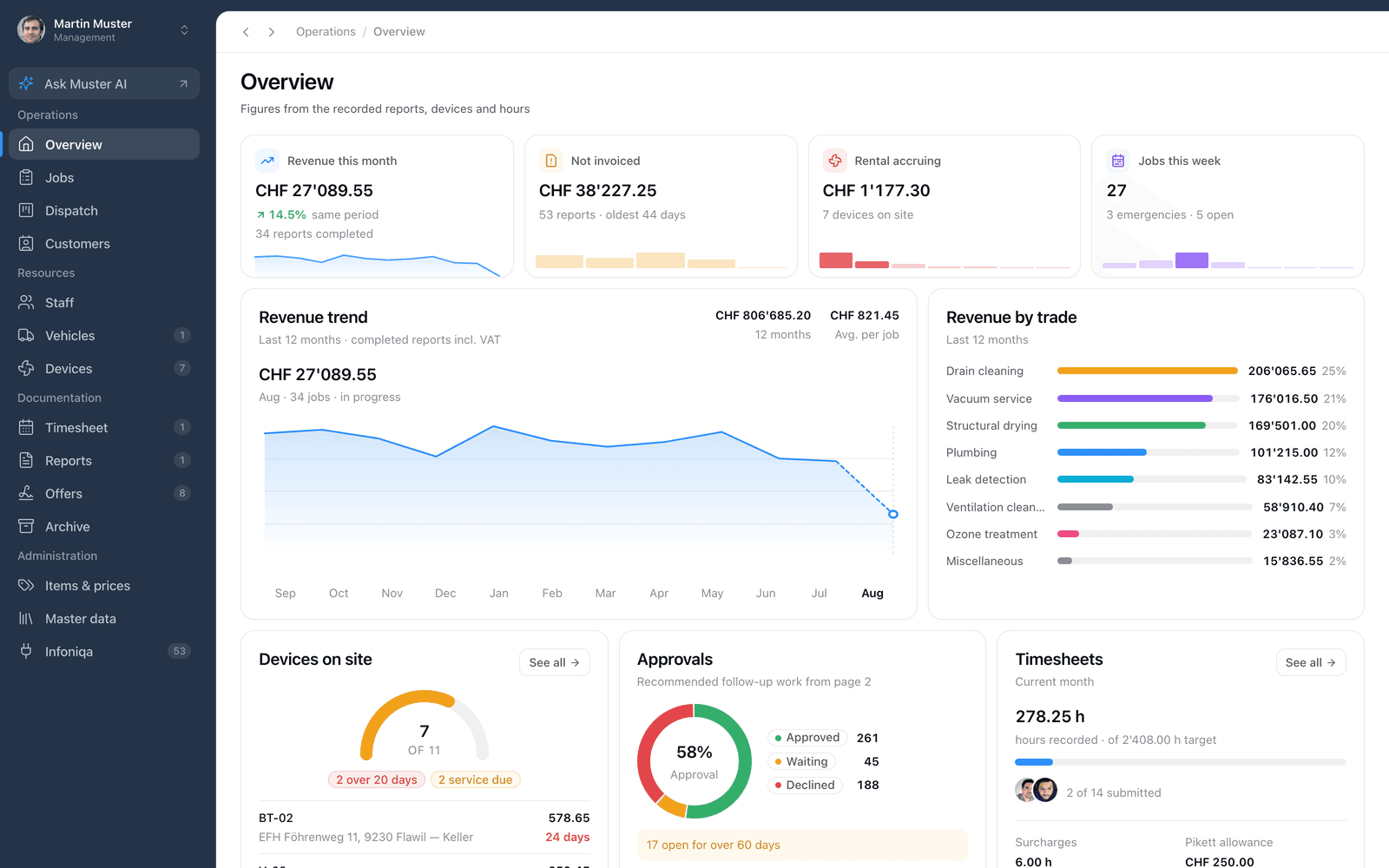
Field-Service Platform
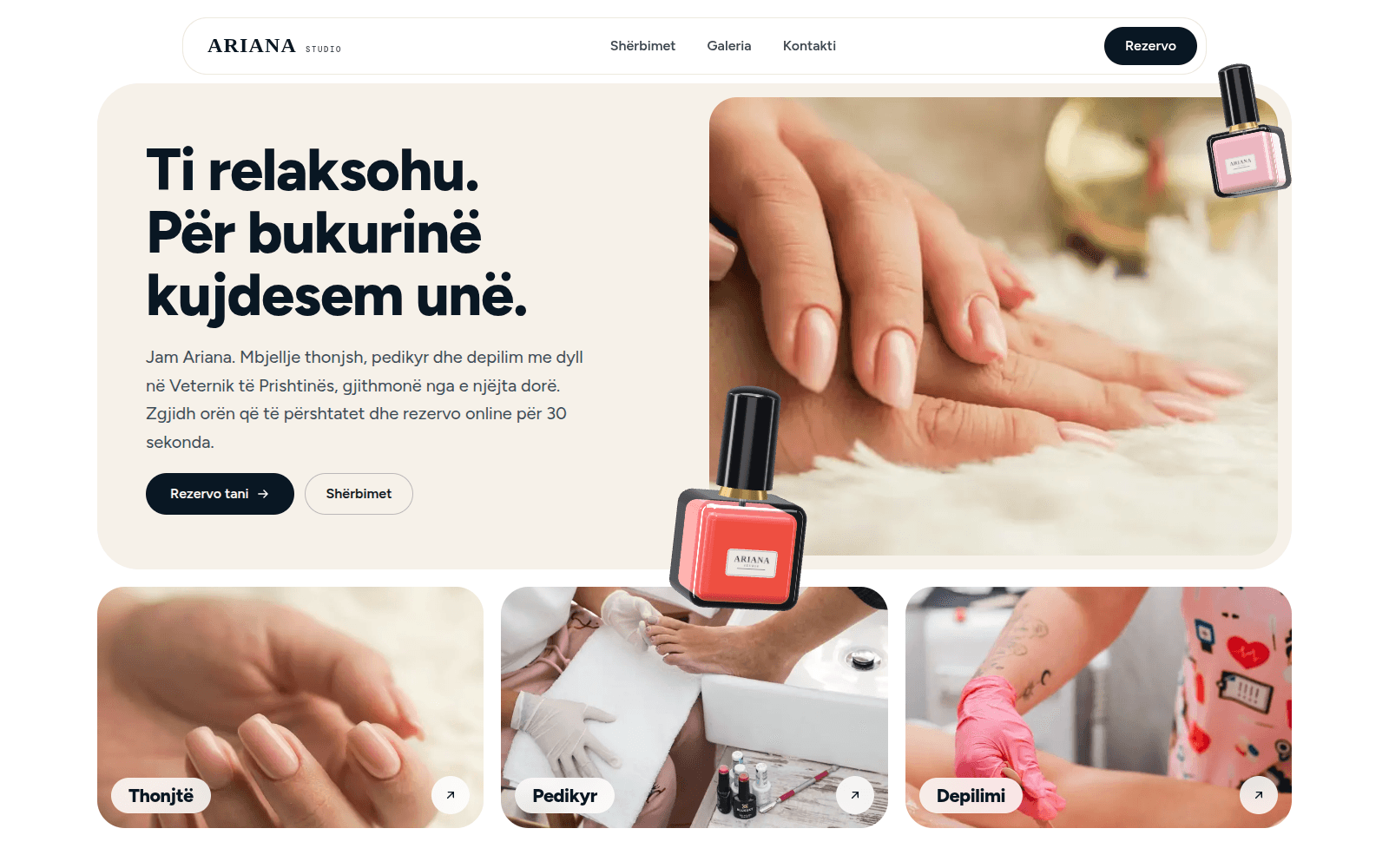
Ariana Studio
Visit siteFrequently asked questions
How much does custom software cost?
Web apps and platforms start from €3,000 with us. Software with several modules, roles, data migration and integrations is quoted at a fixed price after one call, and the written quote arrives within two working days.
Why don't you quote an hourly rate?
Because an hourly rate shifts the risk of a wrong estimate onto you. We quote a fixed price for a defined result; if we misjudge the effort, we carry the difference.
How long does it take?
The first working version usually lands within 4 to 6 weeks. The rest is built in phases, with the date and price of each phase written into the quote.
What does maintenance cost?
Hosting, updates and changes are described and priced in the quote, together with where the system runs. Maintenance is a service with a written scope, not a compulsory subscription.
Can we start small?
You should. Start with the module that takes the most manual work, put it into use, then extend. That way the value of phase one pays for phase two, and a wrong turn stays small.
Is an off-the-shelf tool cheaper?
At first, yes. If your process fits a ready-made tool, choose it, and we will tell you so too. Custom software makes sense when your rules are specific and when subscriptions and manual work, added up over the years, cost more than a single investment.
Who keeps the data?
You do. The domain, the hosting accounts and the data in the system are in your name, with export to common formats.
Let's start your project
Tell us about your business in a few lines. Adrian Fusha, our founder, replies within one working day with a plan and a fixed quote. WhatsApp is usually faster.