Website design for LOG Group, a logistics company in Kosovo
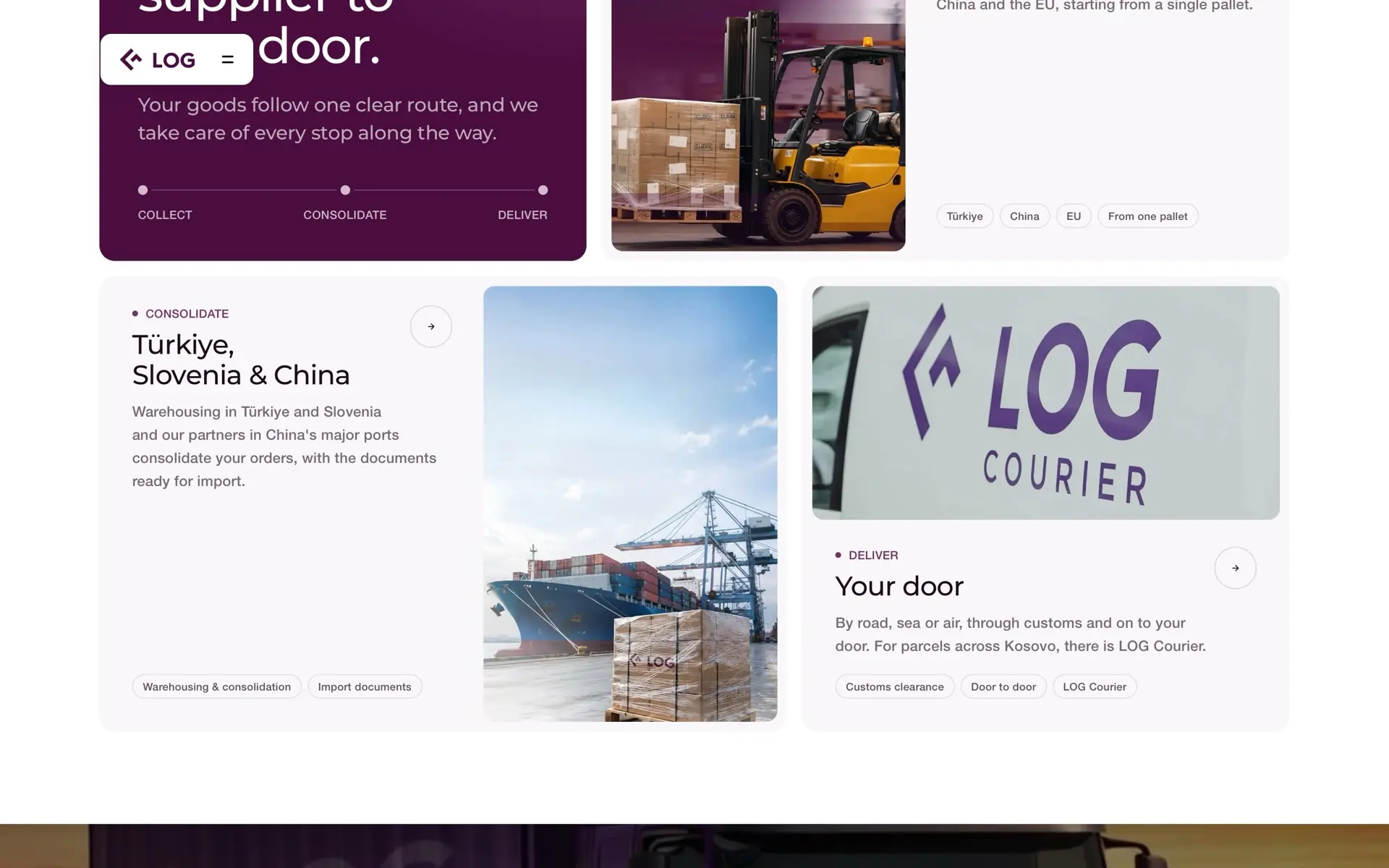
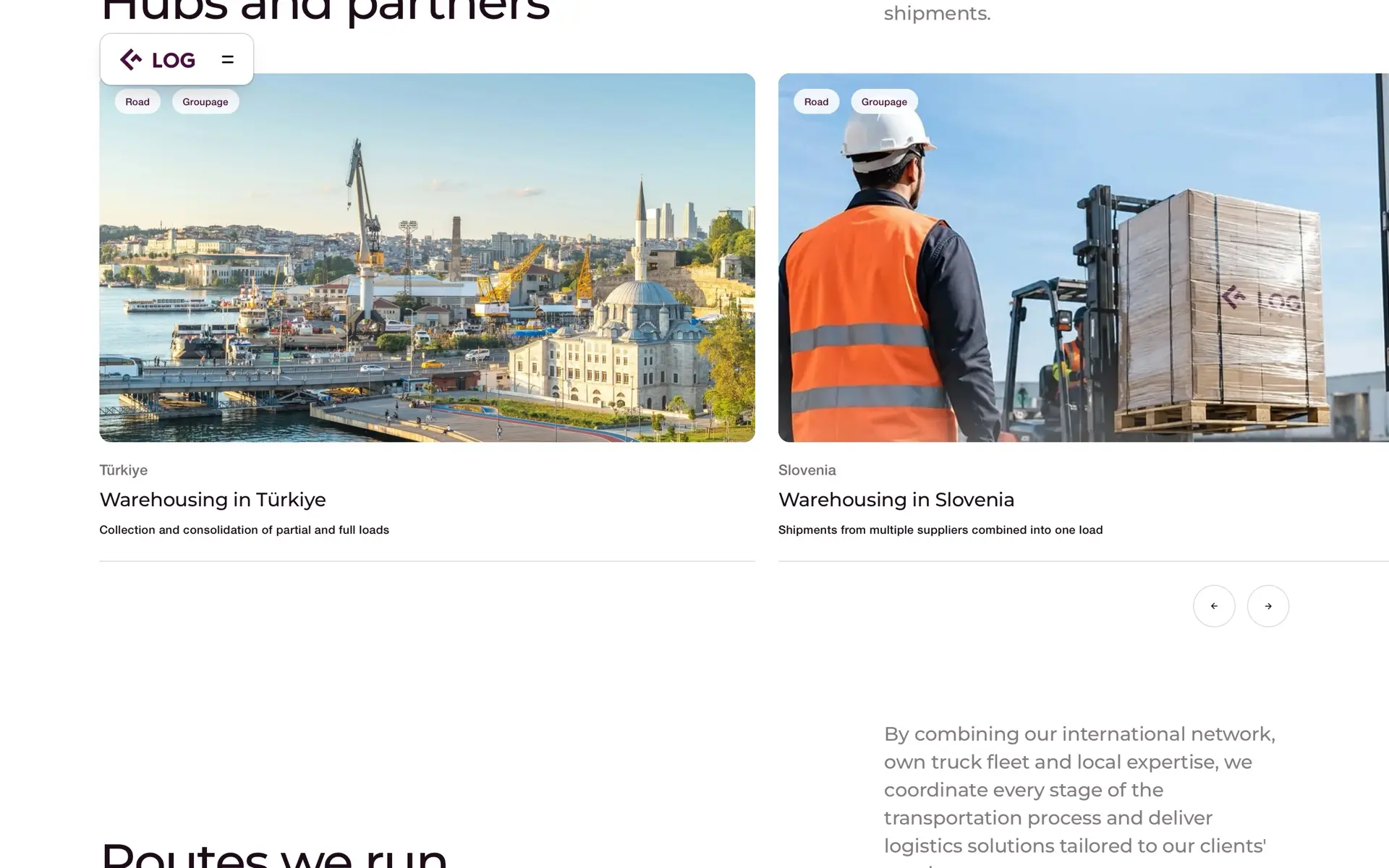
We designed and built log-ks.com for LOG Group, who have moved freight in and out of Kosovo since 2013 by sea, air and road, and run a public customs warehouse in Prizren. Transport companies all say the same four words on their websites. This one shows the work instead: the route from a supplier in China to a door in Prishtina, drawn on a map that builds itself, with every service named plainly and one form at the end.
- Client
- LOG Group, Prishtina
- Live site
- log-ks.com
- Built
- Design · Motion · Map
- Year
- 2026



Frequently asked questions
What should a logistics company's website actually show?
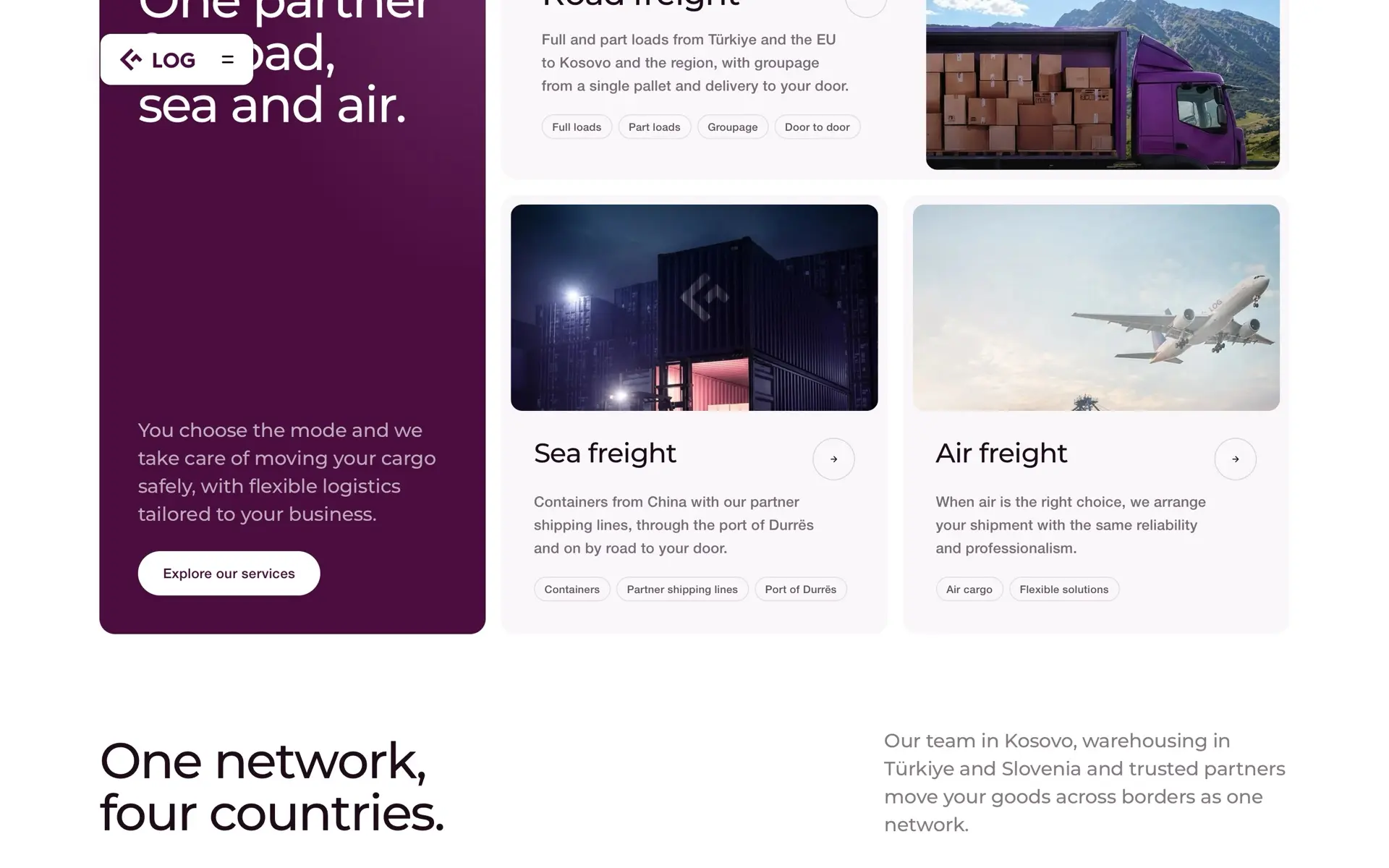
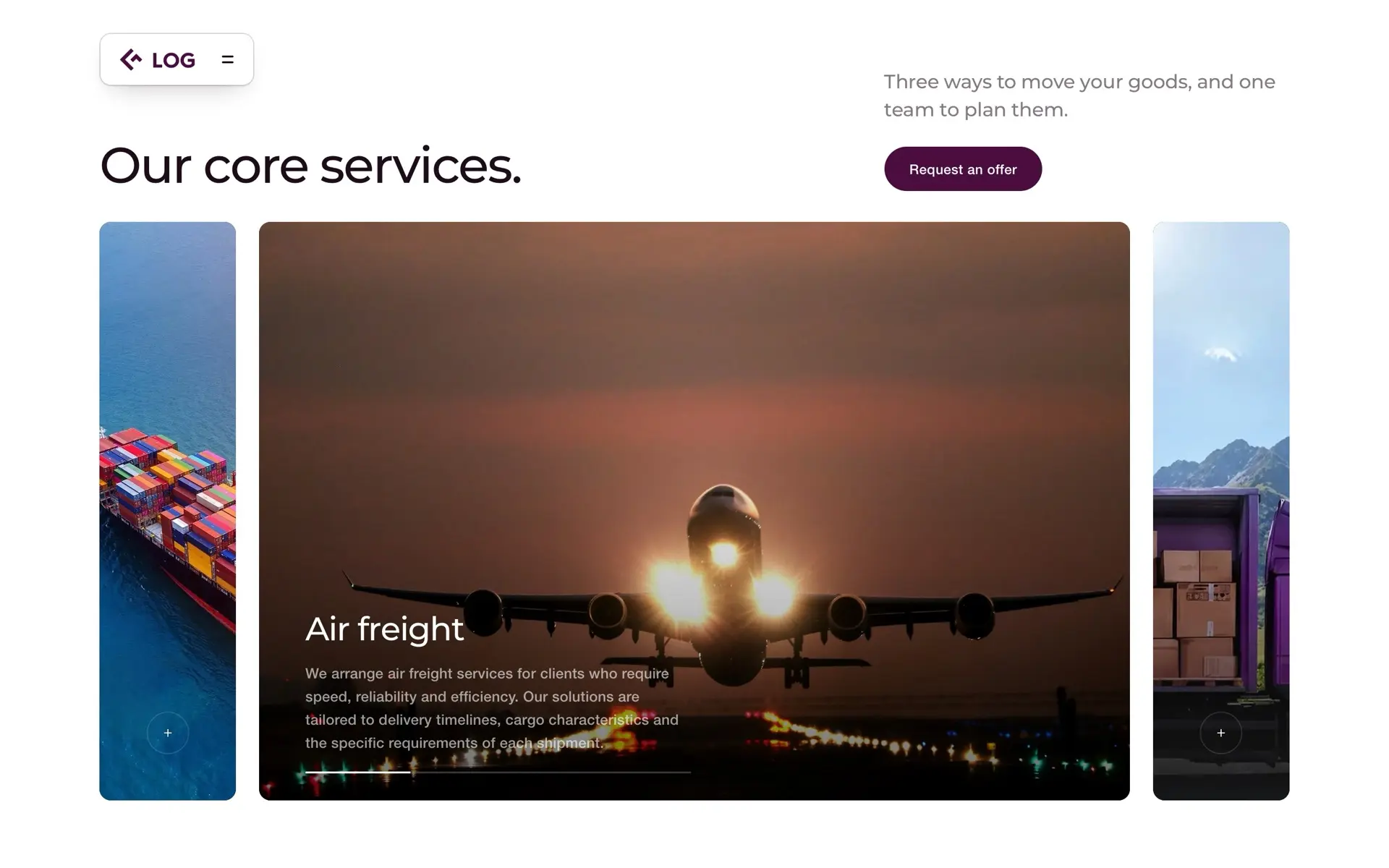
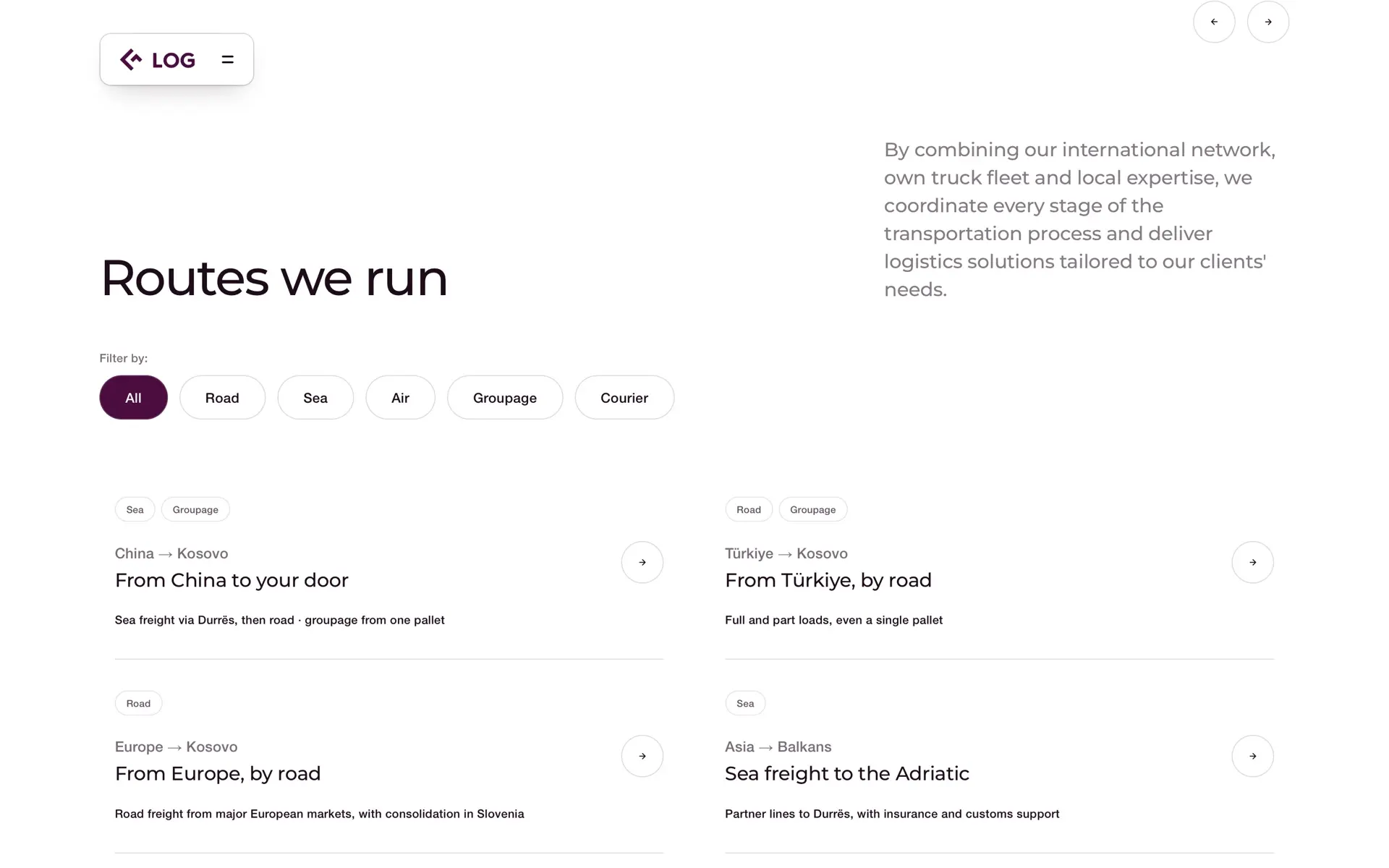
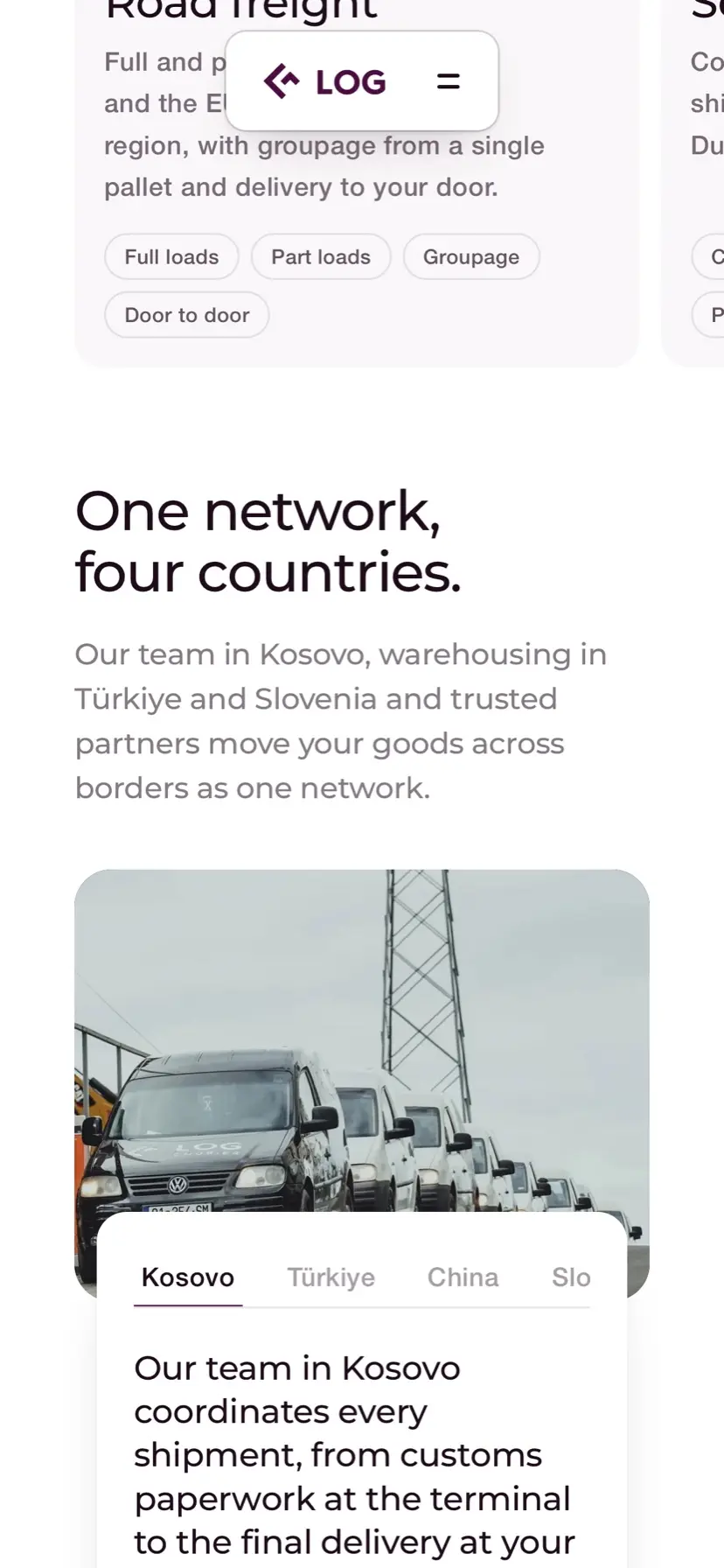
The route, the services and one way to ask for a price. Freight buyers are not browsing: they have a load, an origin and a date, and they want to know whether you handle it. log-ks.com answers in that order. The home page shows road, sea and air as three cards, then follows one shipment from a supplier abroad to a door in Kosovo. The network page draws the real routes on a map. The services page names all nine, including the ones nobody thinks to ask about, like a public customs warehouse. The form at the end asks for the service, where the goods start, where they go and when they are ready, which is what a forwarder needs before they can quote at all.
How do you show a shipping route network on a website?
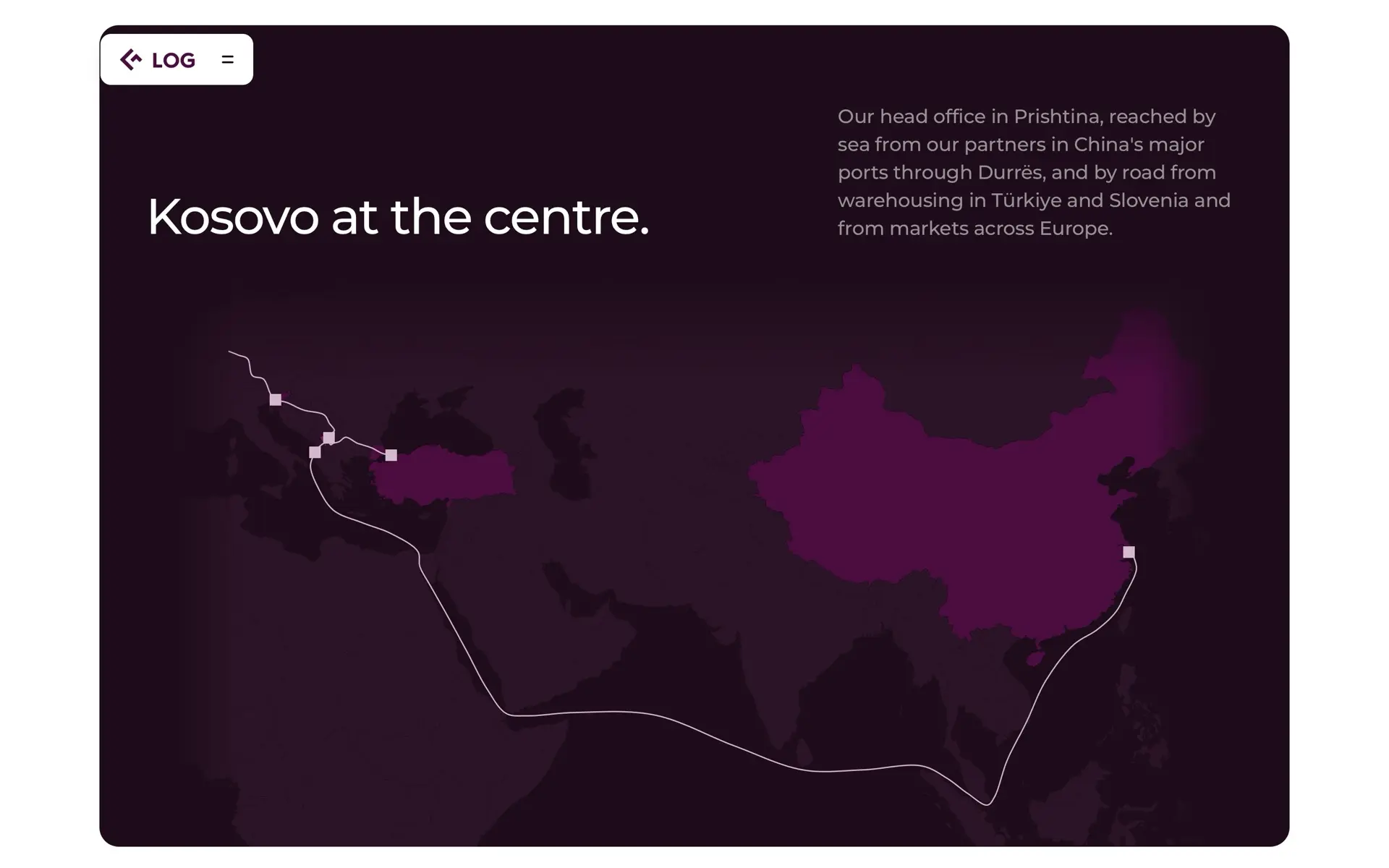
Draw it, and let it draw itself. The map on log-ks.com is not a picture and not an embedded map service: it is built from public Natural Earth coastline data in a projection that spans from Europe to China, with four routes laid over it. The sea route runs from Shanghai to Durrës through Suez; the road routes come from Türkiye and across Europe, through the cities they really pass. Each route has its length measured in advance so it can draw itself end to end. They play in turn, fade, pause and start again, and they stop altogether when the map leaves the screen so a phone is not drawing a map nobody is looking at.
Does a transport company need a website if it gets work by phone?
It needs one more than a shop does. Nobody picks a forwarder from an advertisement; they check whether the company looks real, whether it handles their lane, and whether it has a warehouse or just a desk. That check happens on your website, before the phone call you want. A site that names the routes, the customs procedures and the warehouse answers it in thirty seconds. It also answers it for the search engines and the AI assistants that people now ask the same question.
What makes a business website feel like it moves?
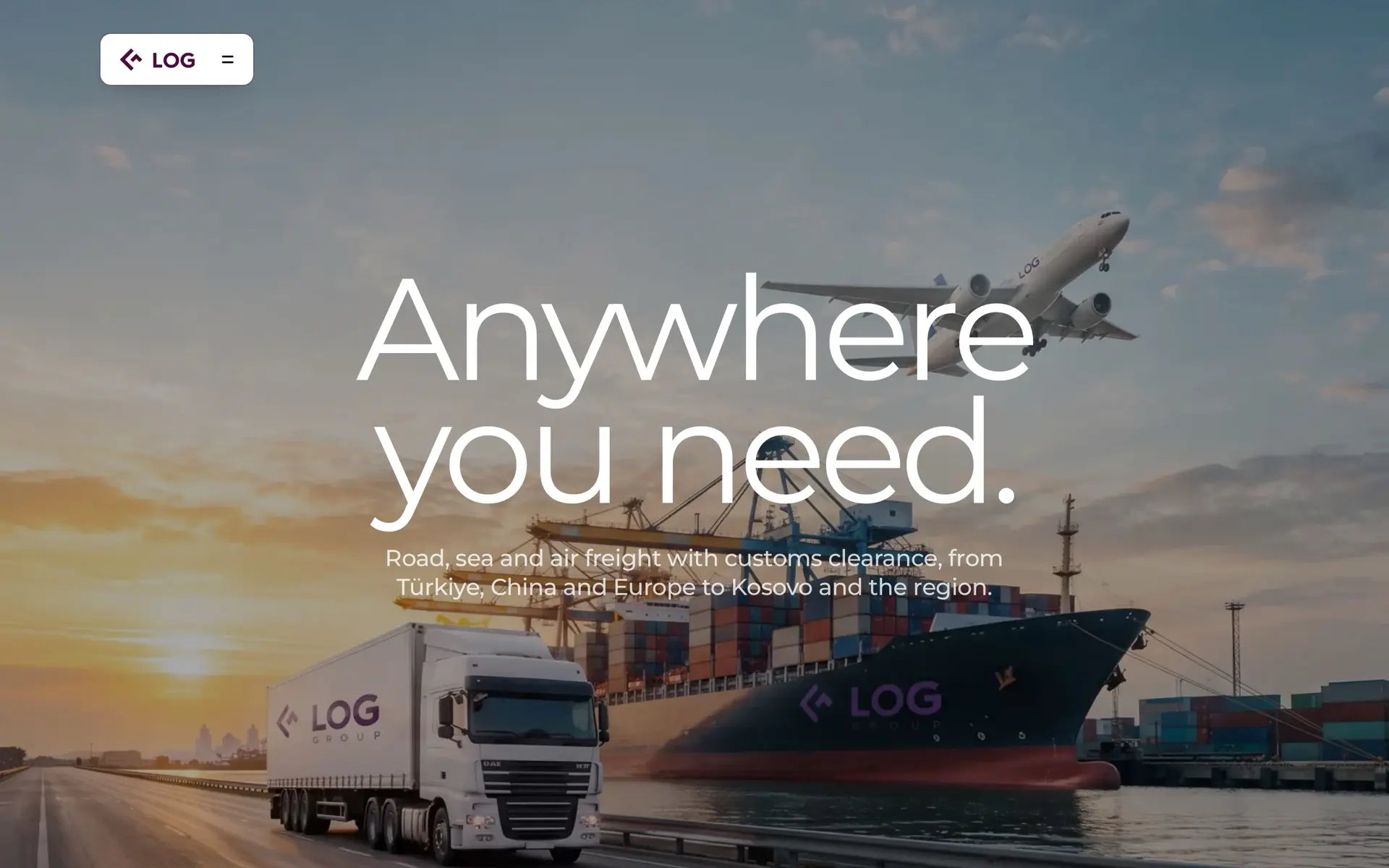
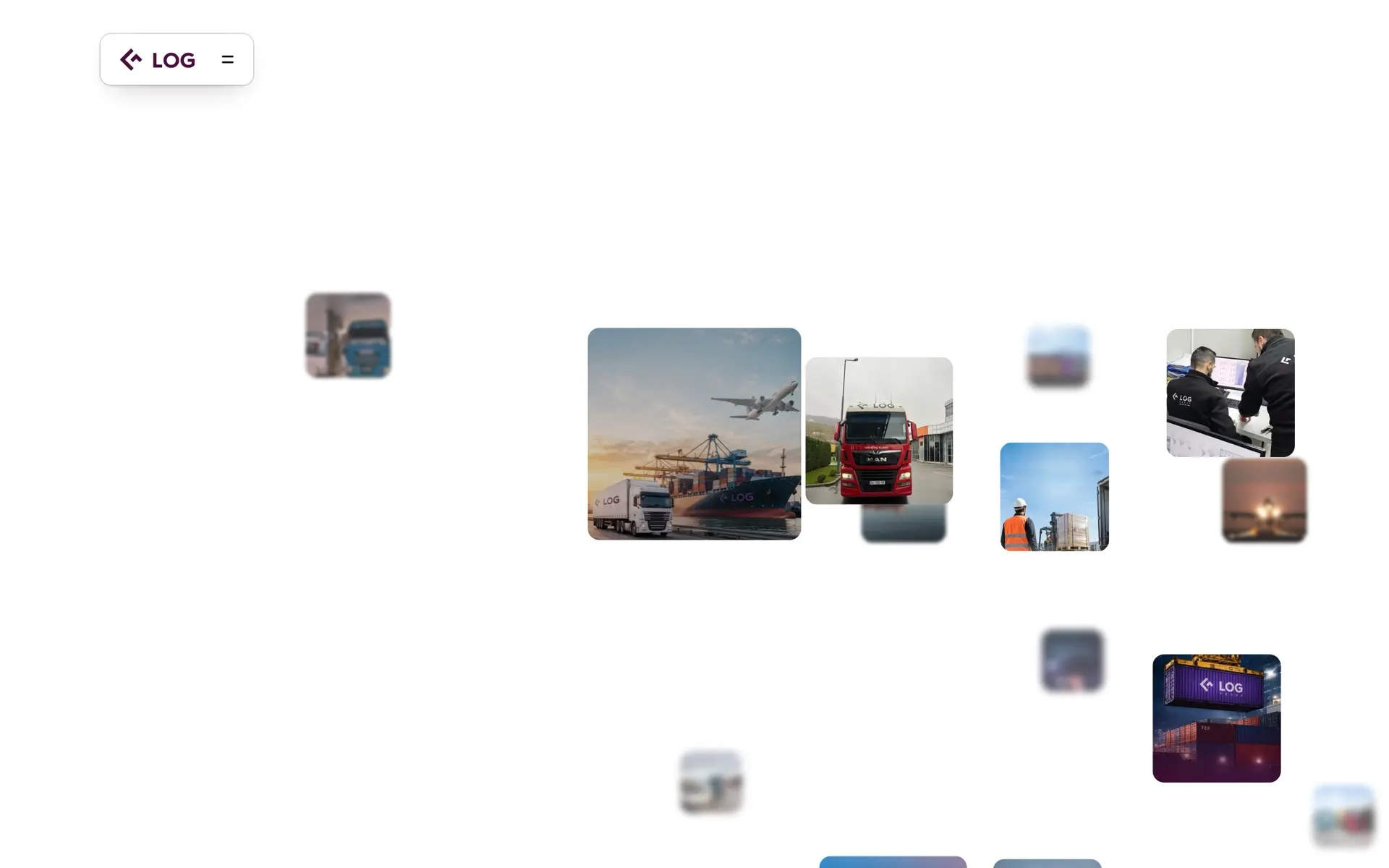
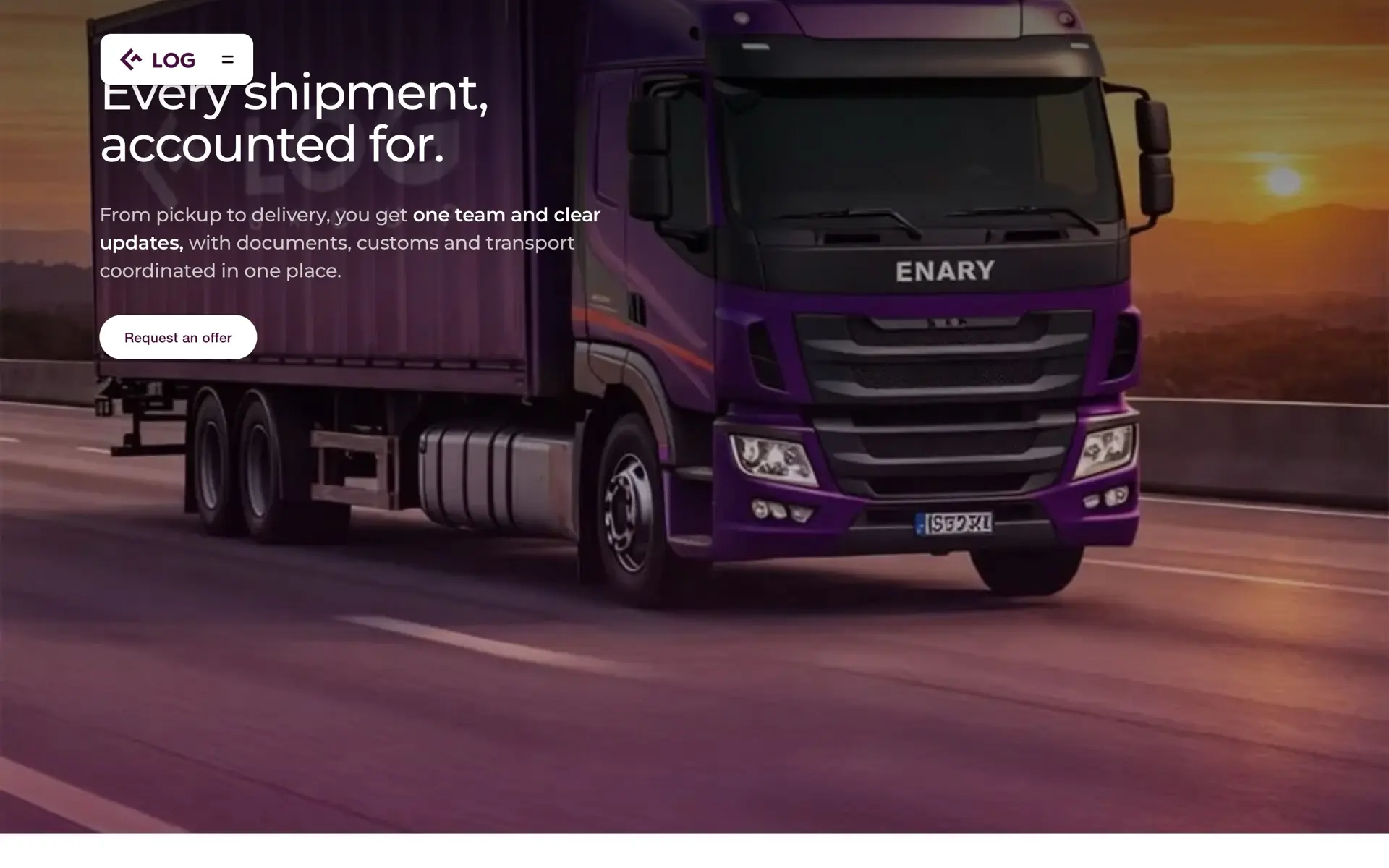
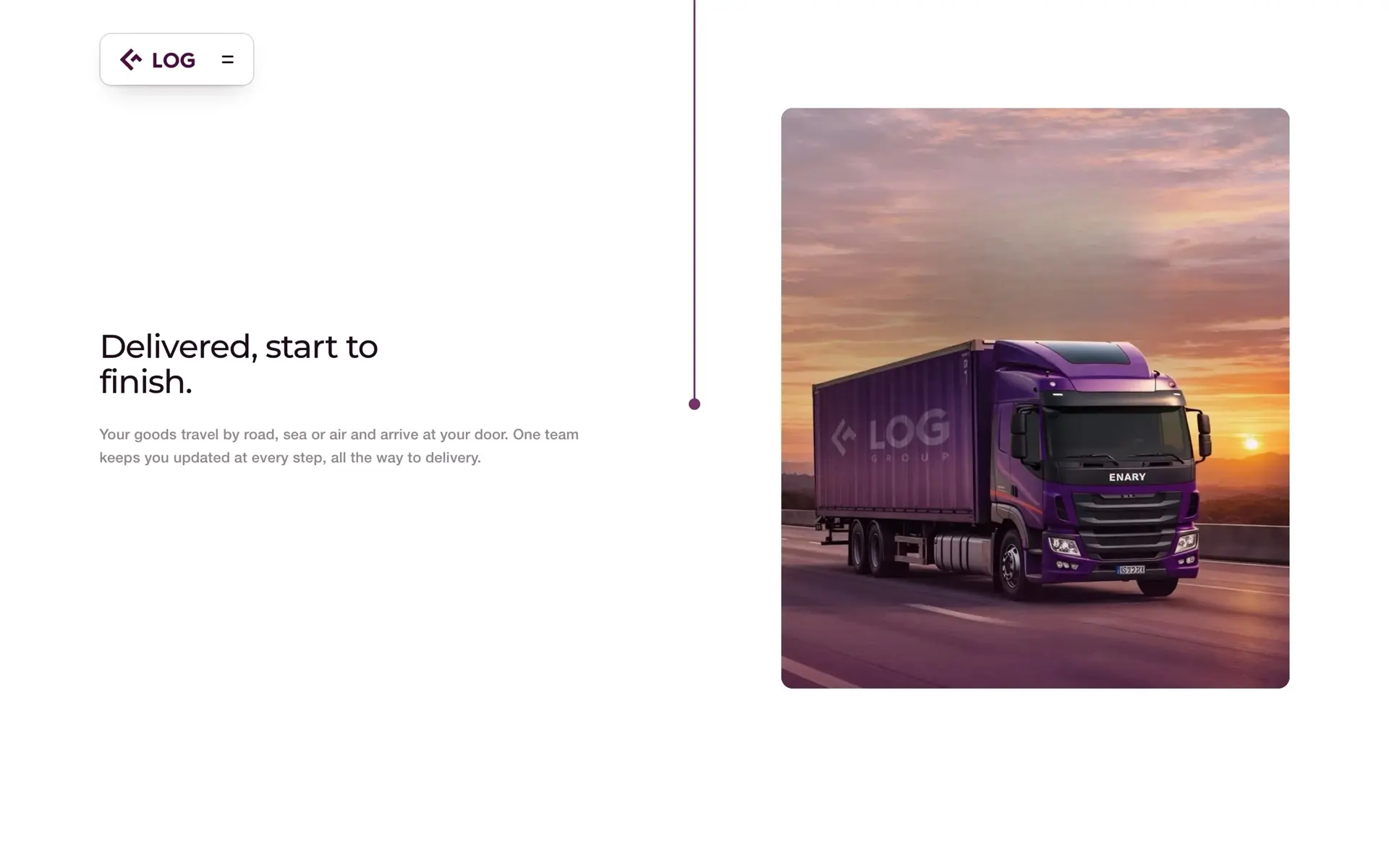
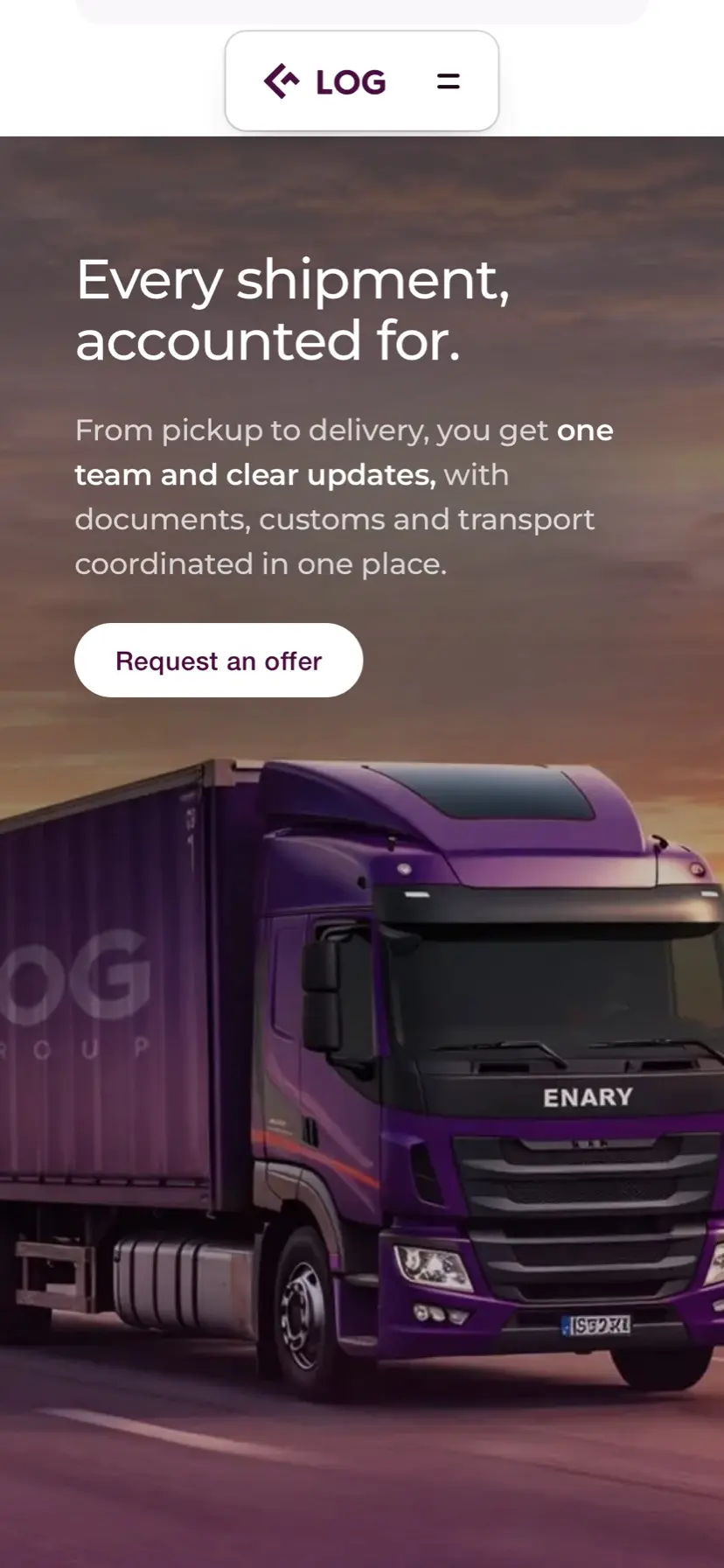
Motion that carries the meaning, not decoration on top of it. On log-ks.com the opening photograph does not slide away when you scroll: it shrinks, rounds off and lands as one tile in the field of freight pictures below, so the page says that this one shipment is one of thousands without writing the sentence. Further down, the three steps of a shipment hold the screen while you read them, the line between them draws itself, and the three service cards take turns opening. Each of those is a sentence told in movement.
Can a website have this much animation and still be fast on a phone?
Yes, when the animation is tied to the scroll rather than to a clock. Most of the motion here runs as native scroll-driven animation, which the phone's own compositor handles, so it stays exactly in step with your finger instead of lagging behind it on an iPhone. The site is exported as finished files with no server to wait for, the photographs are prepared as WebP at the widths a screen asks for, and links fetch the next page only when you hover them.
Why does this site have no cookie banner?
Because it sets no cookies. There is no analytics script, no advertising tag and nothing written into the browser's storage, so there is nothing to ask consent for and nothing to hide behind a banner. The contact form sends an email and keeps no record of its own. Fonts and images are served from the site itself rather than from someone else's network. It is the simplest way to be straightforwardly lawful, and it makes every page faster.
Should a Kosovo company's website be in English or Albanian?
Both, written separately. On log-ks.com English sits on the plain addresses and Albanian under /sq, each with its own titles and descriptions, and every page tells search engines where its twin is. For a freight forwarder the two languages do different jobs: the Albanian pages answer local importers, the English ones answer the foreign suppliers, agents and shippers who are deciding whether to route a container through Kosovo at all.
What is the LOG Group website built with?
Next.js and React in TypeScript, with Tailwind CSS, Motion for the animation and Lenis for smooth scrolling. The whole site is exported ahead of time as static files, so no server has to run when a page is opened. The only moving part behind it is the endpoint that sends an offer request on as an email.
How do you make a logistics website that AI assistants will recommend?
Say what you do in words a machine can lift. log-ks.com publishes an llms.txt that states the company, its services and its routes in plain text, and its robots file lets the AI crawlers in by name instead of blocking them. Every page carries structured data: the organisation with its real addresses, the countries it serves and a catalogue of its services, so an assistant answering "who ships from China to Kosovo" has something exact to quote rather than a paragraph to guess at.
Can you build a website like this for my transport company?
Yes. Freight forwarders, hauliers, courier firms and customs agents all have the same problem: the work is invisible, and the website has to make it visible. Tell us about your company and you get a free, fixed written quote within two working days. More on website design in Kosovo and on the business platforms we build.
Who built the LOG Group website?
Pluton Studio is a software studio in Prishtina, Kosovo, founded in 2018 by software engineer Adrian Fusha. We design and build websites, online stores, web apps, mobile apps, custom business software, AI chatbots, AI agents and process automation for businesses in Kosovo, Albania, the Albanian diaspora and across Europe. You work directly with the engineer who builds your project. The LOG Group site was designed and built in 2026.
Let's start your project
Tell us about your business in a few lines. Adrian Fusha, our founder, replies within one working day, and the fixed quote follows within two working days of the first call. WhatsApp is usually faster.
- hello@pluton.studio
- Phone
- +383 49 200 124