A 3D product website for Cufa Group and PRANA recuperators
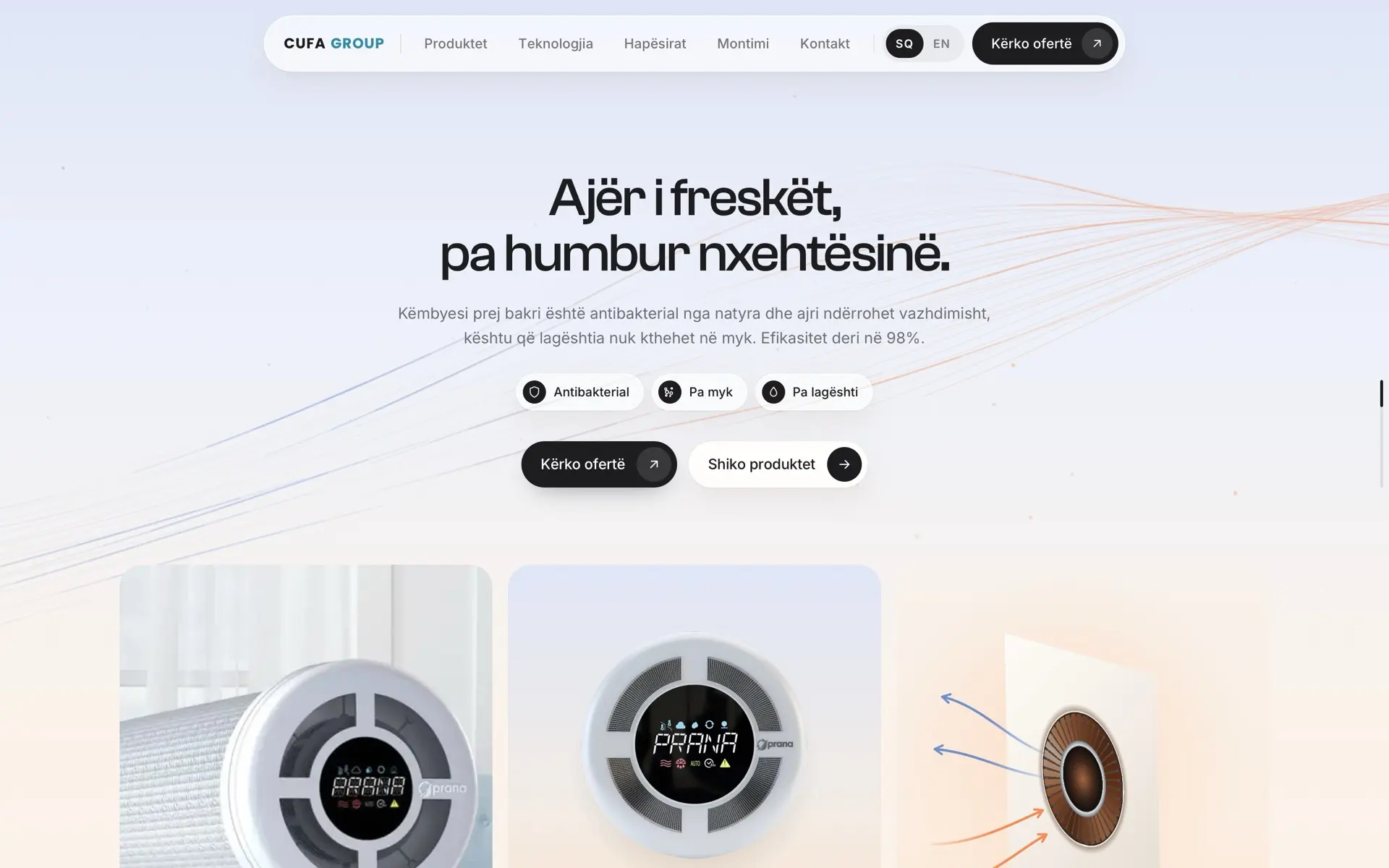
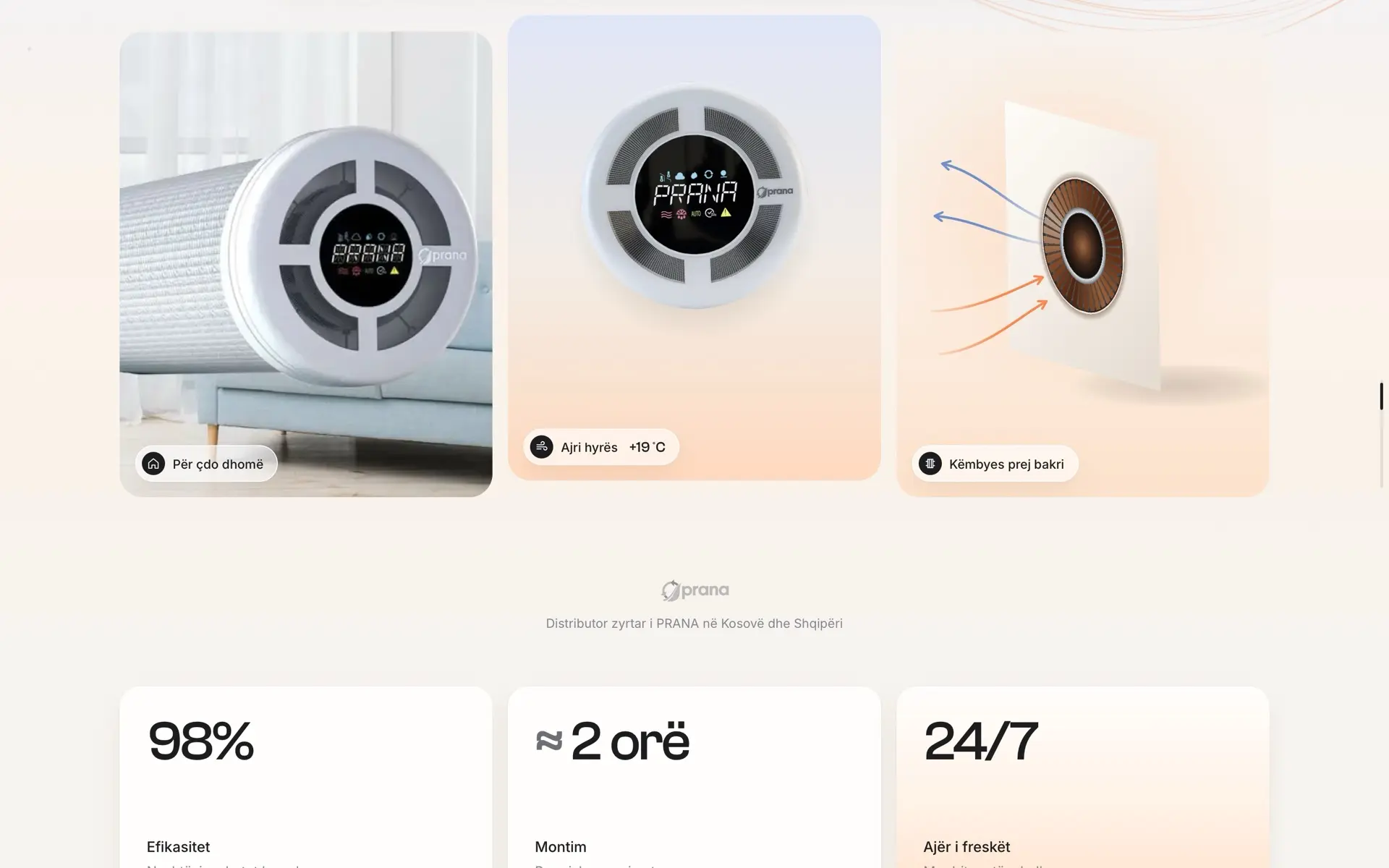
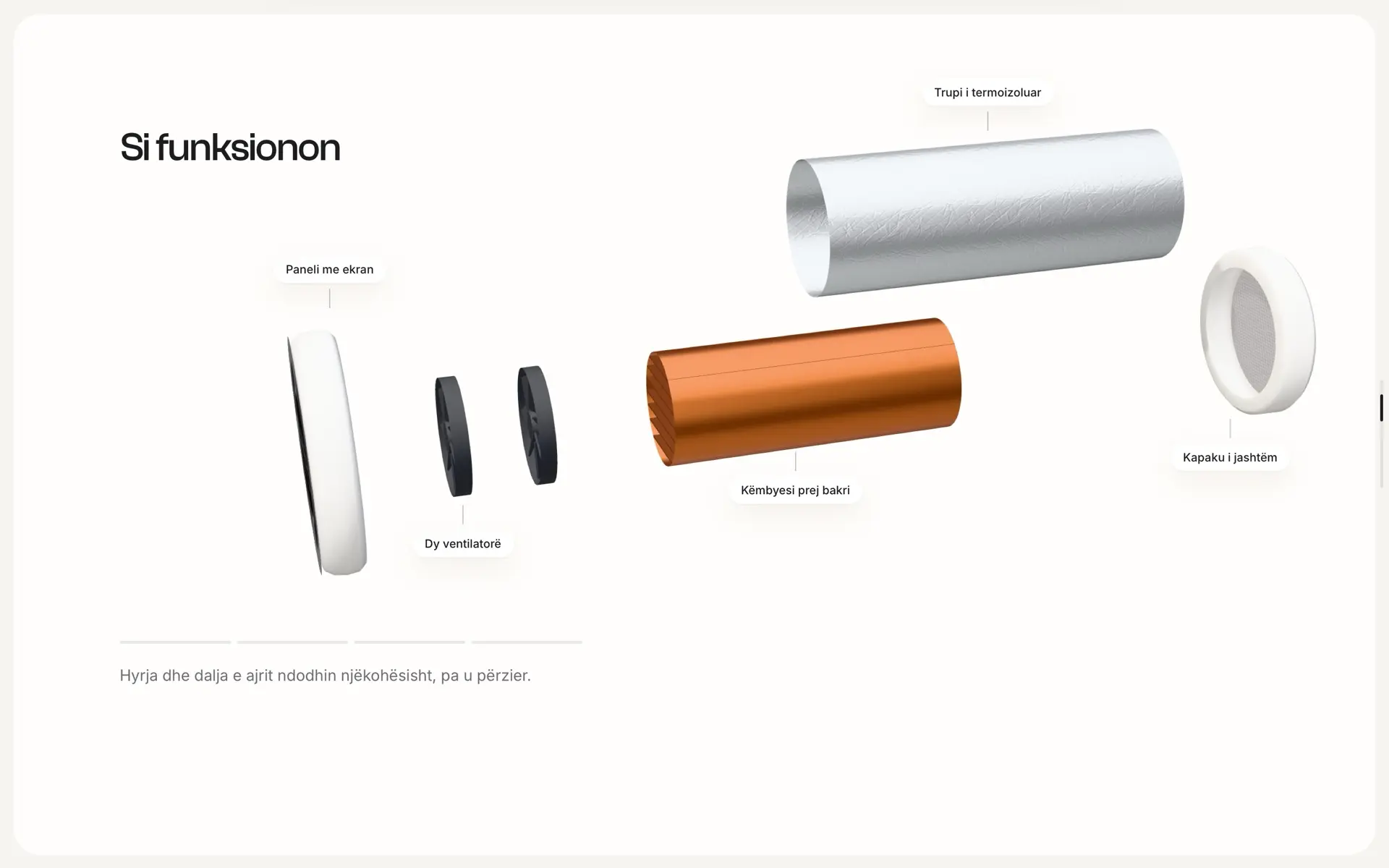
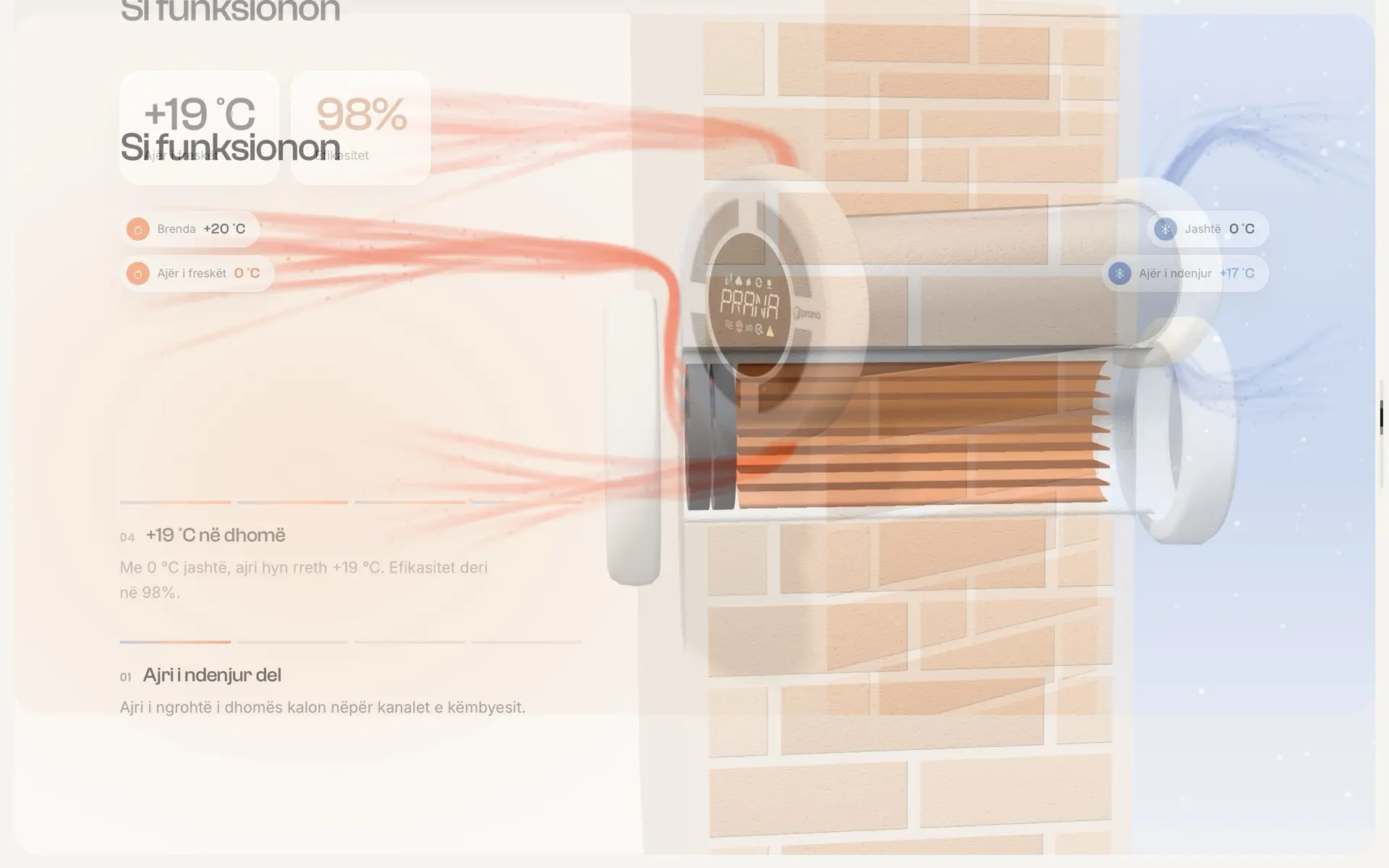
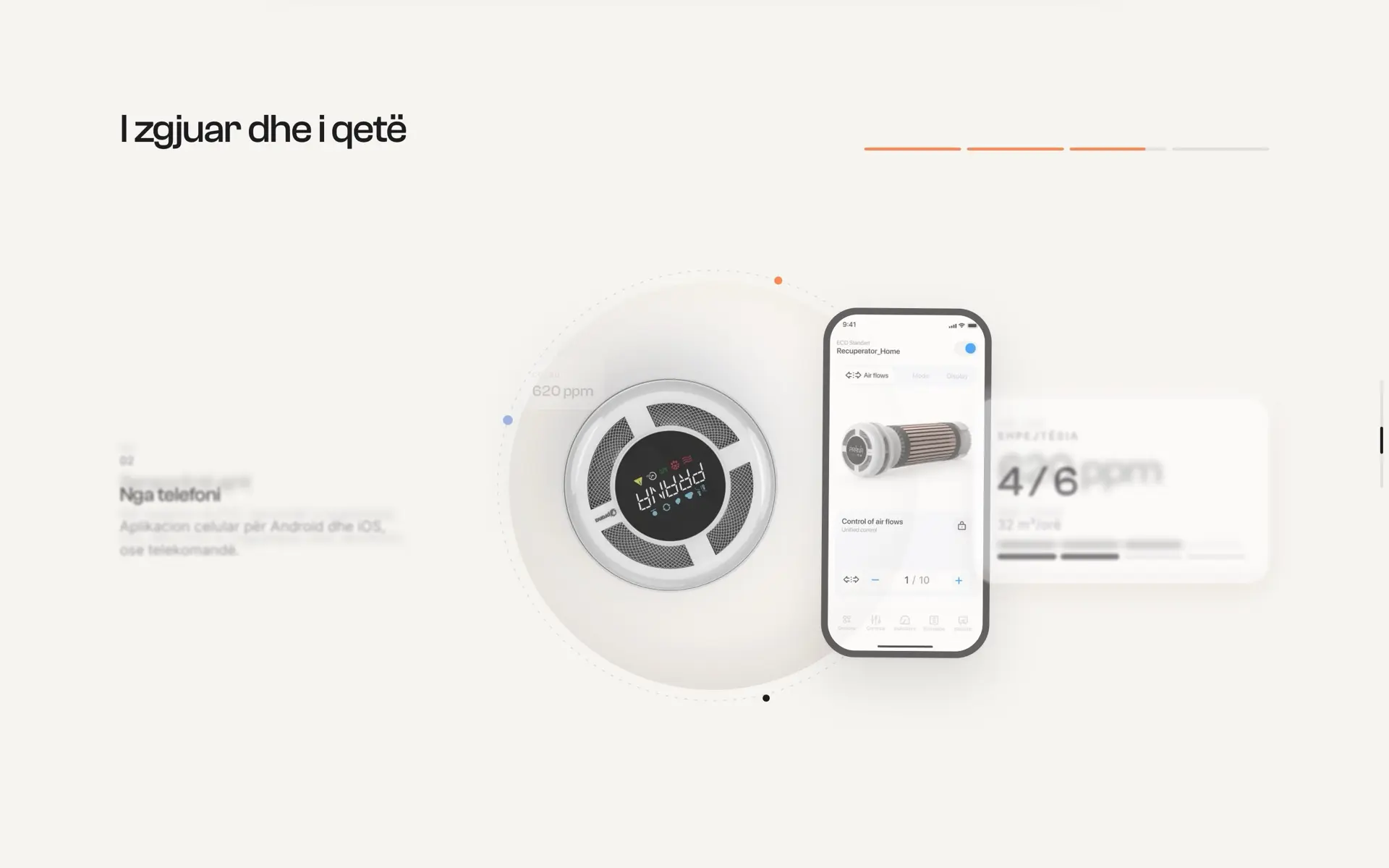
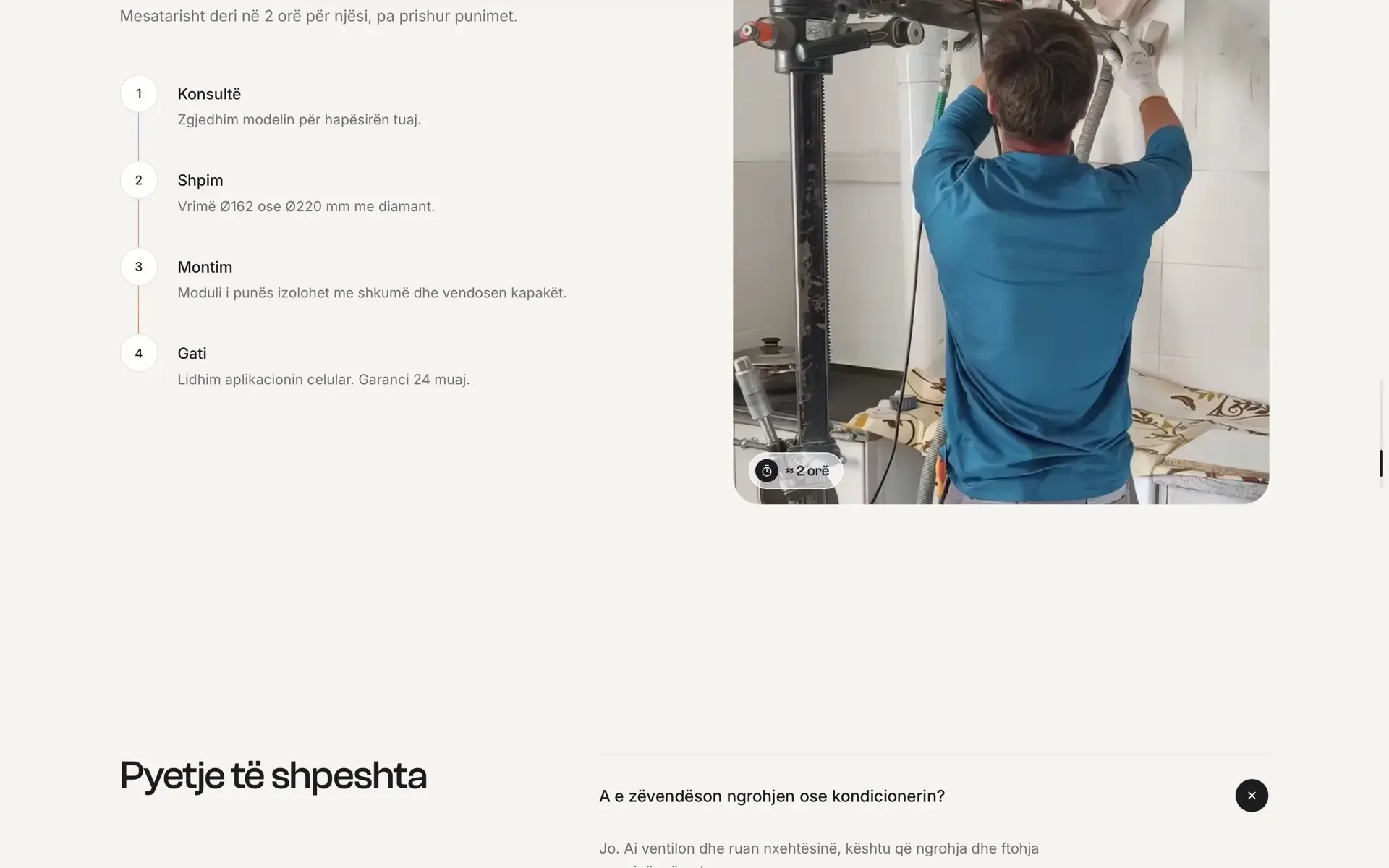
We designed and built cufagroup.com for Cufa Group, who bring PRANA heat recovery units to Kosovo and Albania. The hard part was not the look: it was making a machine inside a wall understandable in ten seconds. So the home page takes the unit apart in 3D, builds a wall around it and cuts it open while you scroll, and the rest of the site answers in order: which model, which room, what it costs to run, who fits it.
- Client
- Cufa Group, Prishtina
- Live site
- cufagroup.com
- Built
- Design · 3D · Catalogue
- Year
- 2026
Frequently asked questions
How do you explain a technical product on a website?
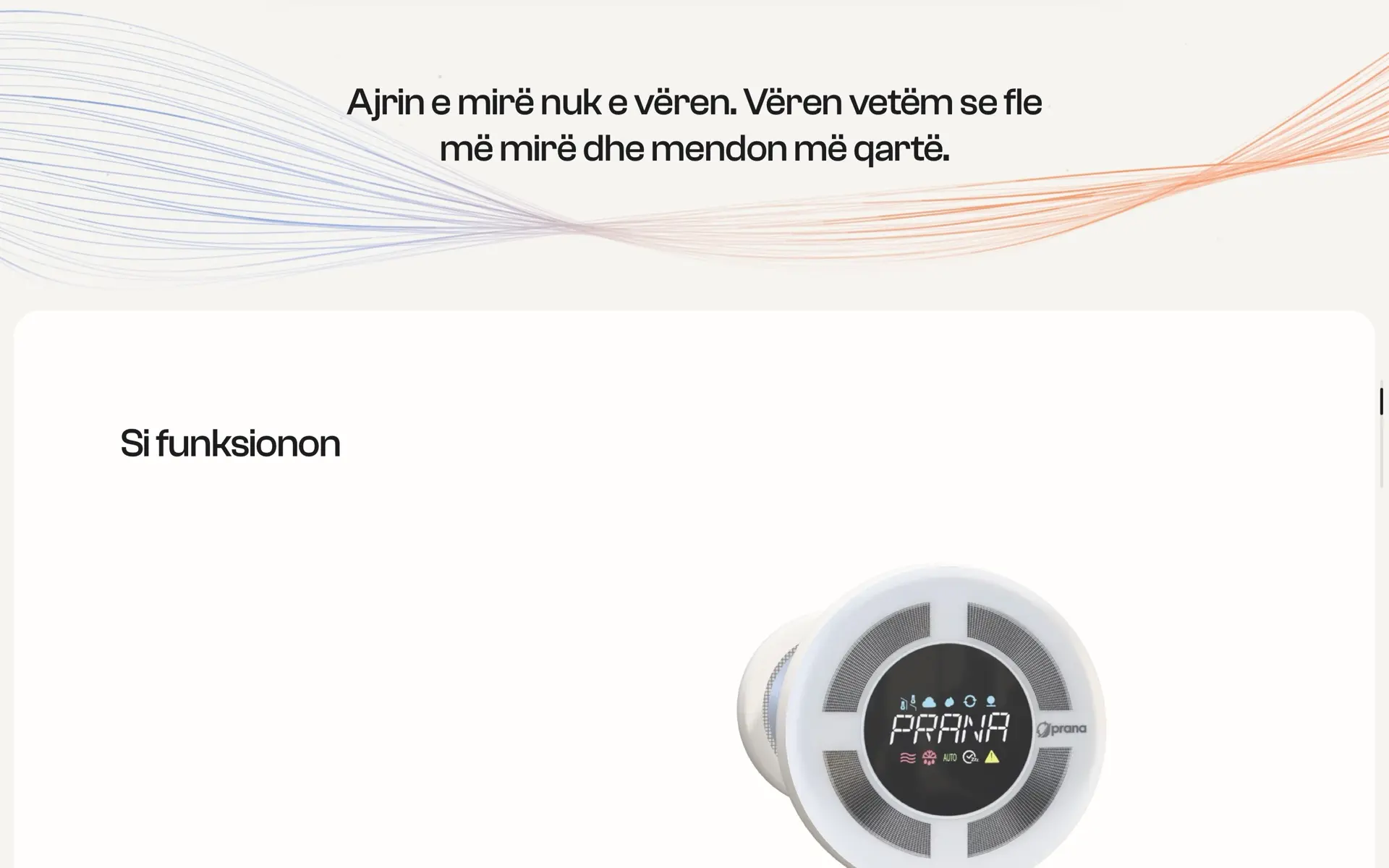
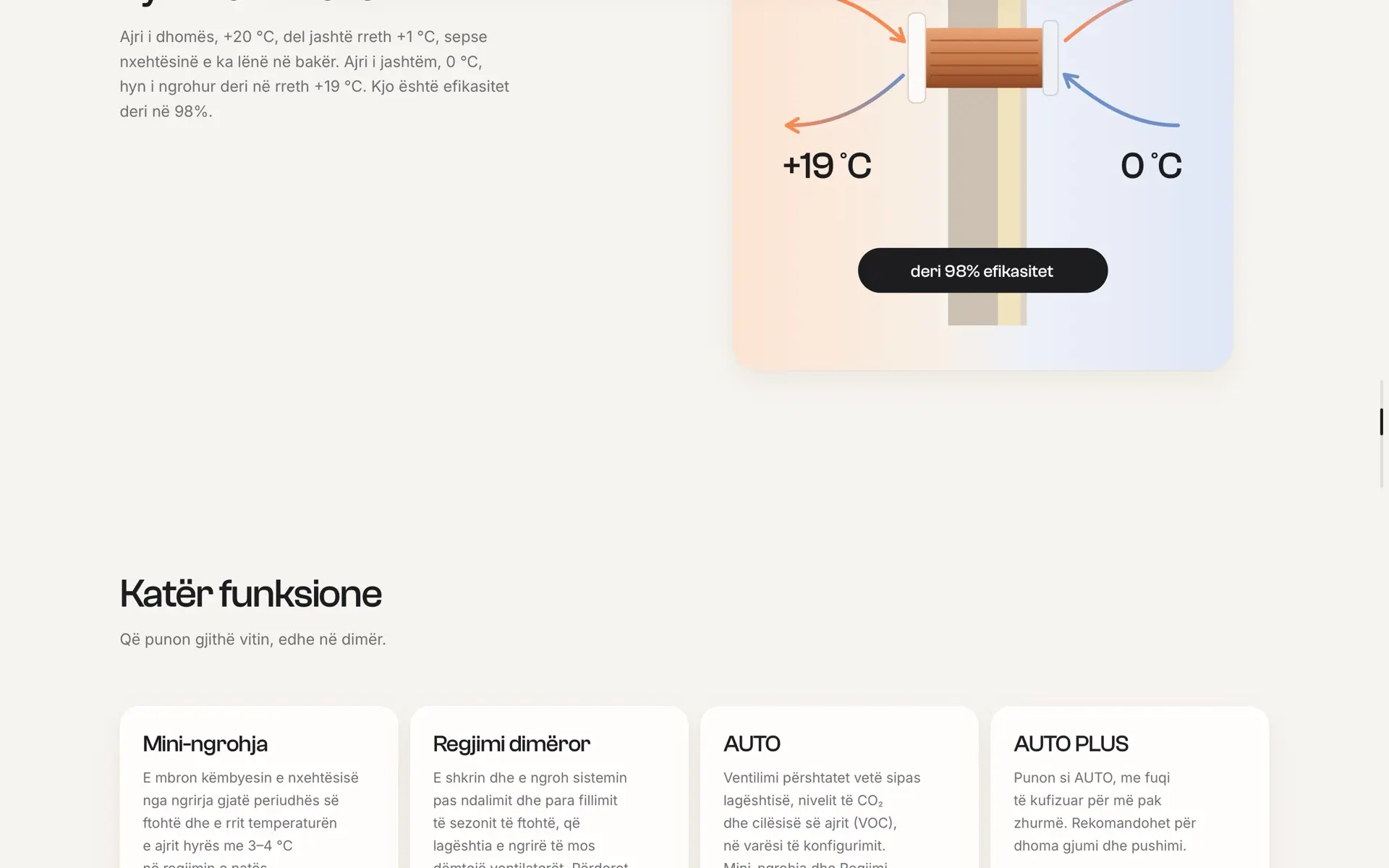
Show it working before you describe it. A recuperator is a tube in a wall: nobody buys one from a photograph of a white disc. On cufagroup.com the home page takes the unit apart in 3D, raises a wall between the two halves, slides the body into the drilled hole from the room side, closes it from the street, then cuts the whole thing open so you watch stale air leave and fresh air arrive warm. It ends on the two numbers that decide the sale. By the time the specifications appear further down the page, the reader already knows what they are looking at.
Can a 3D animation run on a website without making it slow?
Yes, if it is built rather than imported. The explainer on cufagroup.com has no 3D model file at all: the unit, the wall, the copper channels and even the brick and foil textures are generated in code when the page runs, so there is nothing heavy to download. The scene is fetched while the opening animation plays, drawn once in idle time, and fades in on its first frame. It runs at the screen's full rate while you scroll and drops to 30 frames a second when you stop, and nothing at all is drawn when the section is off screen.
What happens if a visitor's phone cannot run 3D?
They get the same explanation as a drawing. If the browser has no 3D support, if the visitor has asked their device for less motion, or if anything in the scene fails, the page quietly shows a flat cross-section instead, with the same four steps and the same numbers. The site also watches the 3D while it runs: if the graphics context is lost it rebuilds it, and after two failures it stops trying and stays on the drawing.
How should a product catalogue be laid out on a website?
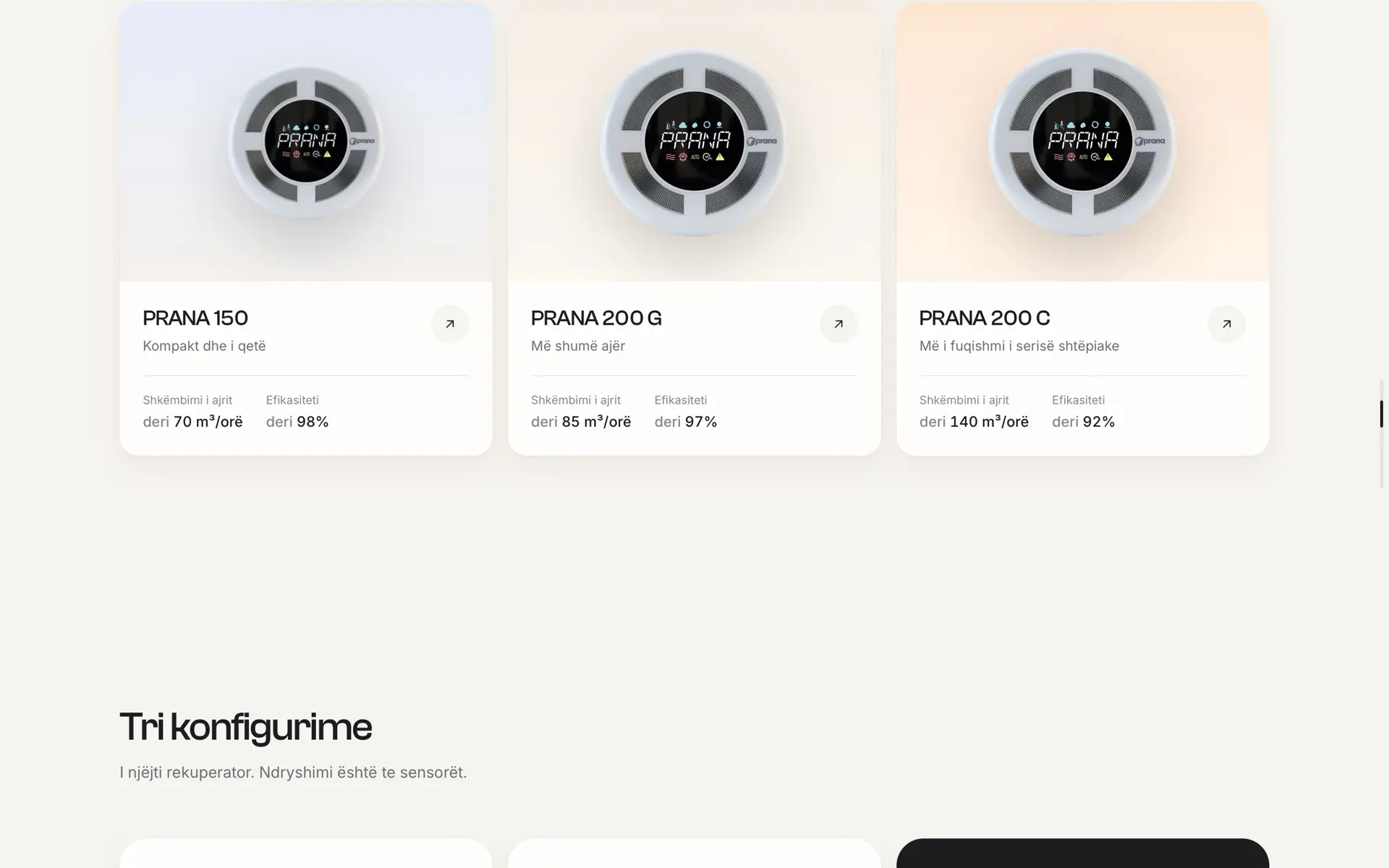
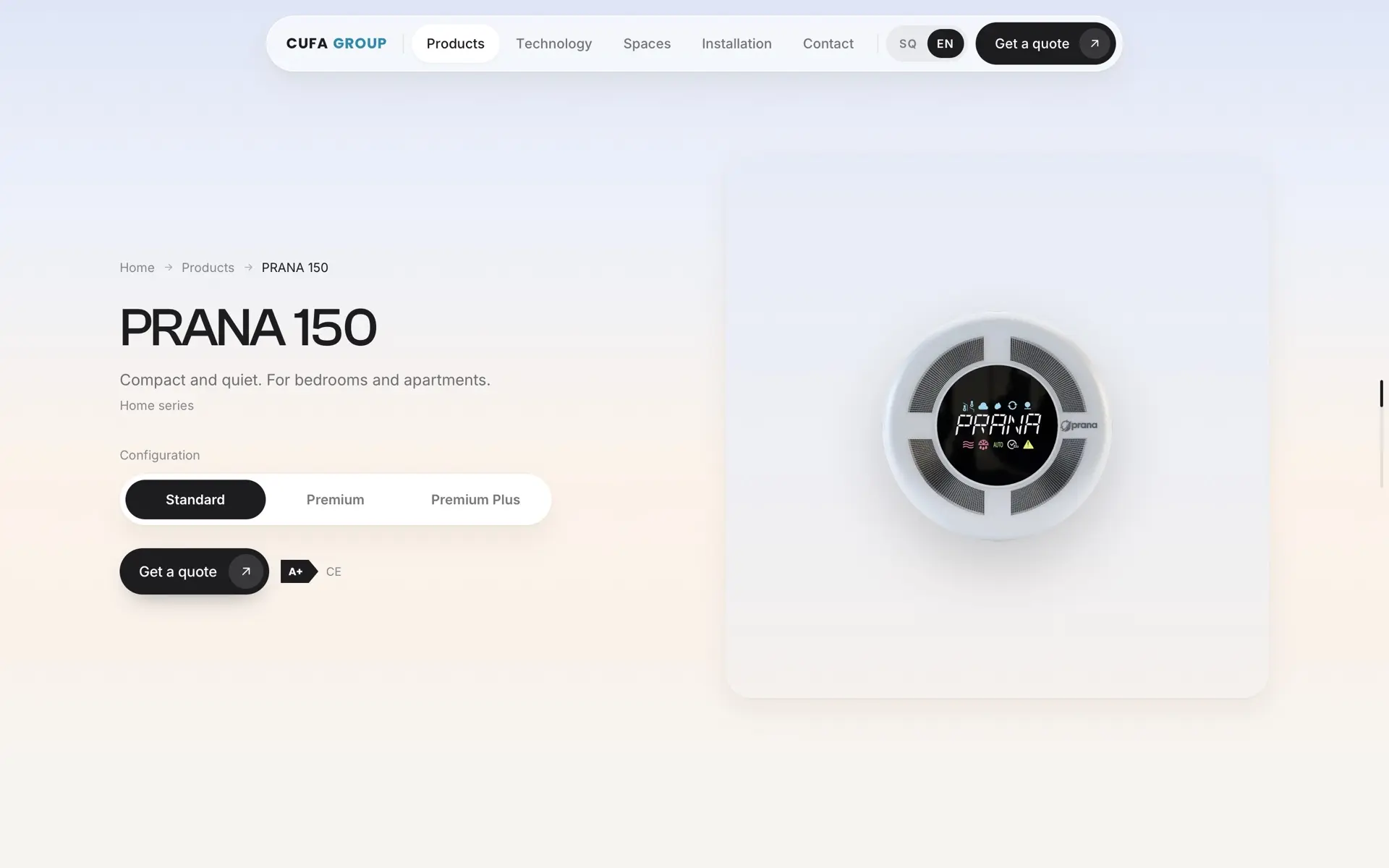
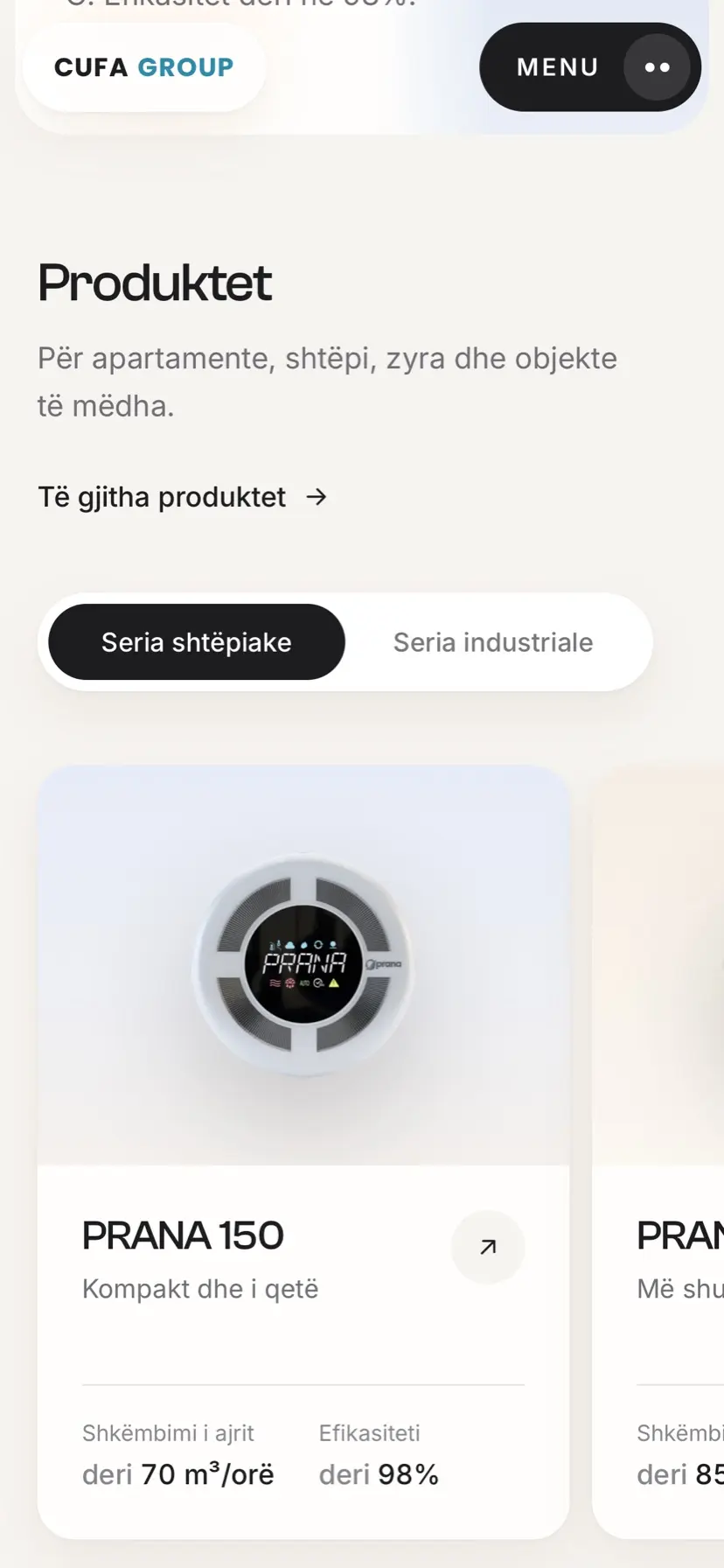
One page per model, and a second way in through the problem. cufagroup.com has a page for each of the five PRANA models with its airflow, efficiency, hole diameter, noise and power, plus a print layout that turns it into a spec sheet an installer can hand over. Next to that there is a page for each kind of room, from a bedroom to a factory, which starts with what goes wrong with the air there and ends with the model we recommend. Buyers who know the model number and buyers who only know their problem both land somewhere useful.
Can a product website work without showing prices?
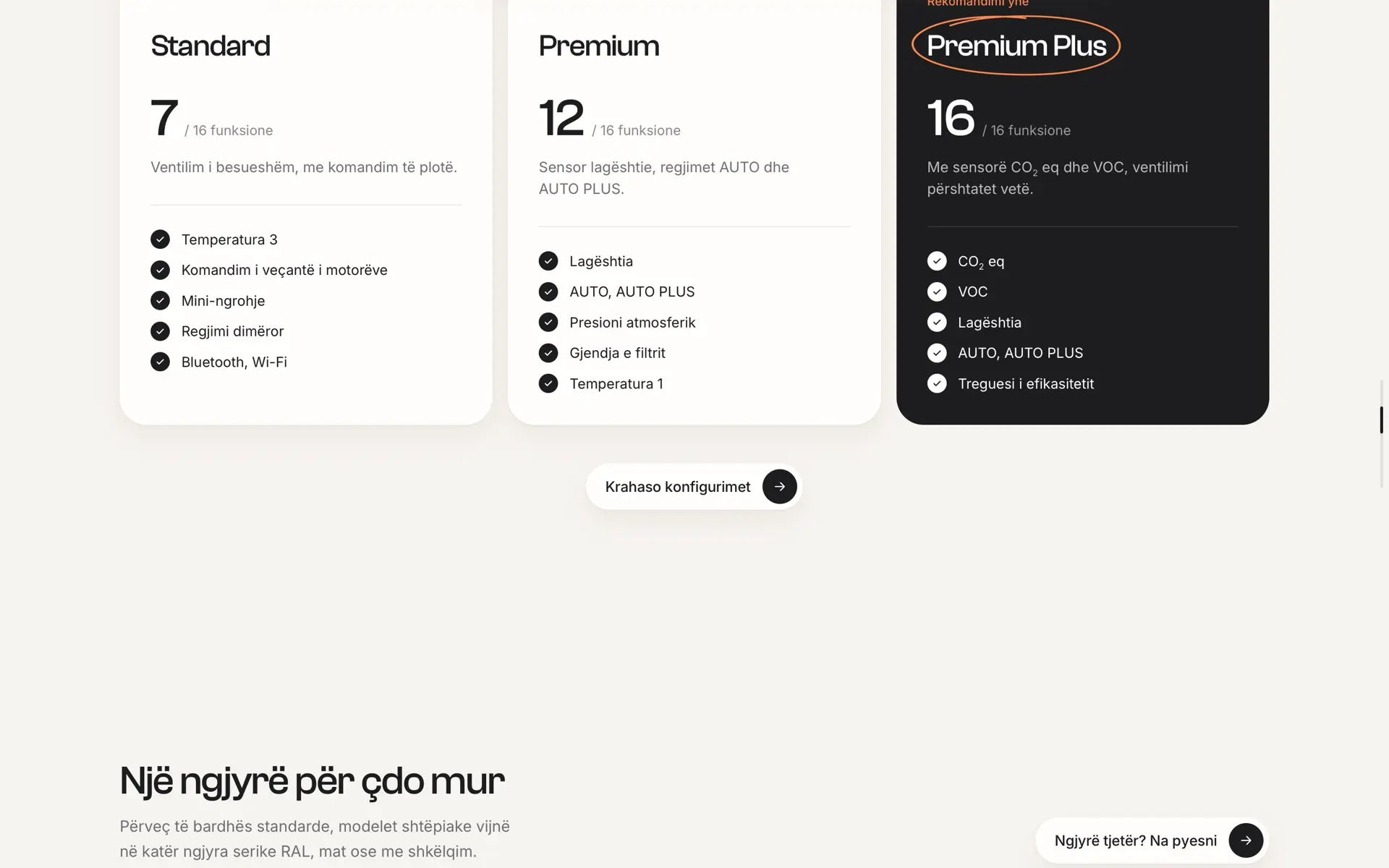
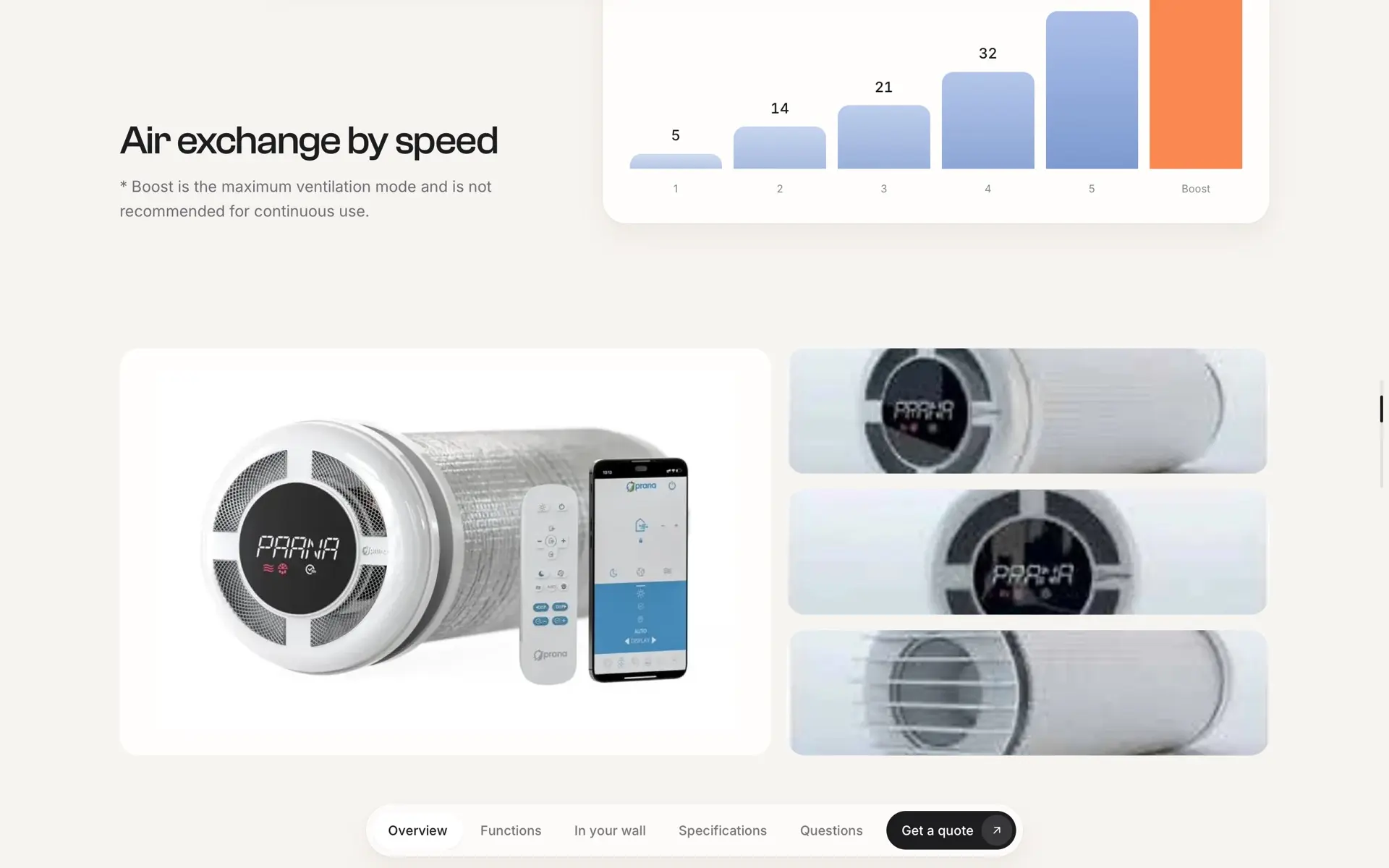
Yes, and this one does. Three configurations of the same unit sit side by side on the home page, and where a price would normally be there is a count of what each one can do: seven of sixteen functions, twelve, or all sixteen. The reader can still compare and still choose, and the quote comes from a short form that already knows which model and configuration they were looking at.
Does a Kosovo business need its website in English as well as Albanian?
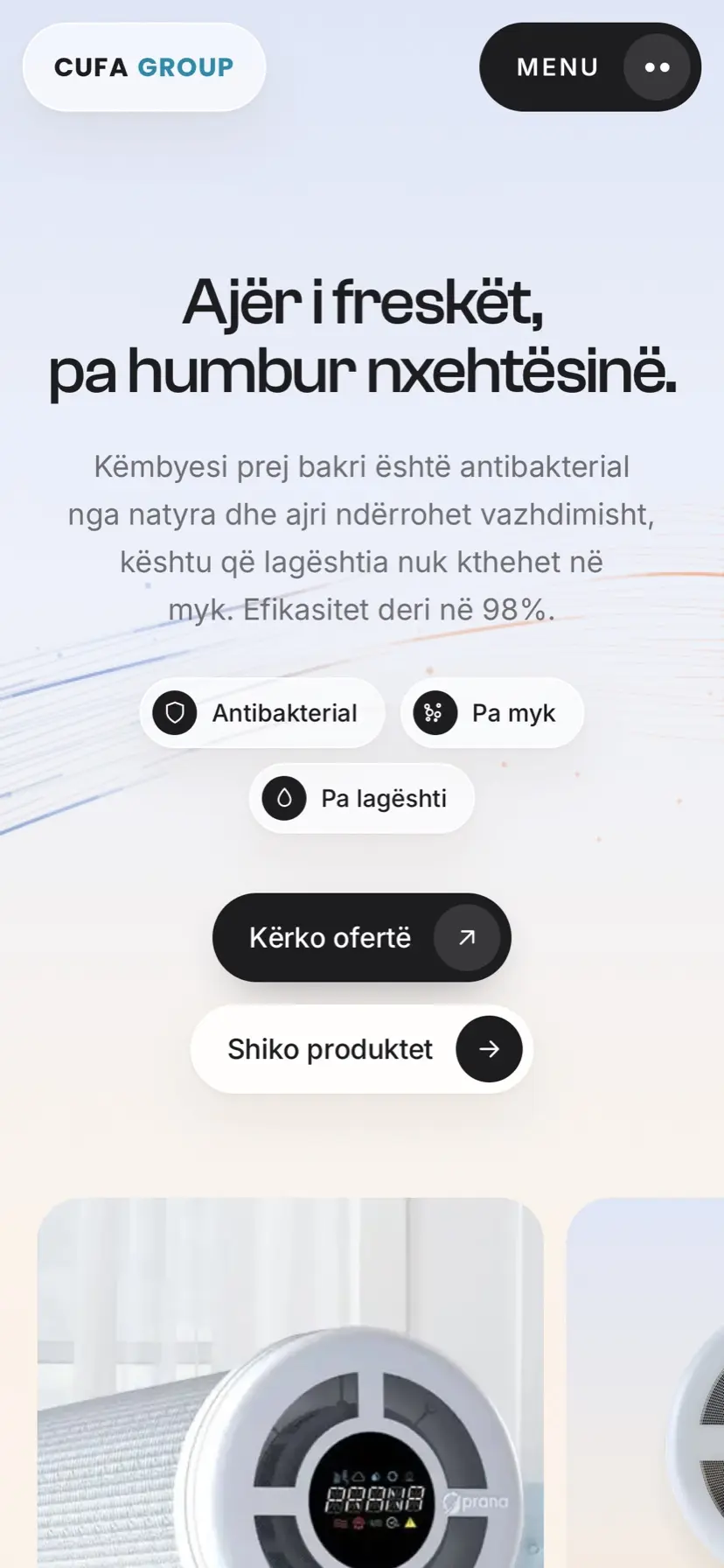
For anything technical, yes. cufagroup.com is written twice, Albanian first and English alongside it, so the pages read naturally in both rather than one being a translation of the other. The addresses differ too: the room pages use Albanian words in Albanian URLs and English words in English ones, which is how each version turns up in its own search results. Assistants like ChatGPT also run a large share of their searches in English even when the question was asked in another language, so an English half of the site is part of being found at all.
How do you make a website that AI assistants can quote?
Write the answers down in plain text and let the machine read them. cufagroup.com publishes an llms.txt and a longer llms-full.txt, both generated from the same product data as the pages, so they can never drift apart. Its robots file names sixteen AI crawlers and lets each one in. Every page carries structured data: the product with its measured properties, the frequently asked questions, the brand and the maker. None of this is a trick; it is the same facts, written once, in a form a model can lift without guessing.
What is the cufagroup.com website built with?
Next.js and React in TypeScript, with GSAP for the scroll animation, Lenis for smooth scrolling and three.js for the 3D. It is hosted on Cloudflare's network and every page is built ahead of time, so a visitor is served a finished file rather than waiting for one to be made.
How do you keep a site this animated from draining a laptop battery?
By refusing to animate anything that is not being looked at. Nothing on this site loops forever: things turn as you scroll instead, every off-screen section has its animations paused, the smooth scrolling detaches itself after thirty still frames, and the one canvas that does run on its own draws at 24 frames a second and stops when it leaves the screen. Measured in Chrome on a 120 Hz Mac, the home page at rest went from about 110 % of a processor core to about 20 %.
Can you build a website like this for my product?
Yes. Products that are hard to picture are exactly what this kind of site is for: a machine inside a wall, something that goes underground, anything whose value is in what it does rather than how it looks. Tell us what you sell and you get a free, fixed written quote within two working days. More on website design in Kosovo and, for another 3D product built in the browser, see the Caffè Iuliano espresso machine.
Who built the Cufa Group website?
Pluton Studio is a software studio in Prishtina, Kosovo, founded in 2018 by software engineer Adrian Fusha. We design and build websites, online stores, web apps, mobile apps, custom business software, AI chatbots, AI agents and process automation for businesses in Kosovo, Albania, the Albanian diaspora and across Europe. You work directly with the engineer who builds your project. The Cufa Group site was designed and built in 2026.
Let's start your project
Tell us about your business in a few lines. Adrian Fusha, our founder, replies within one working day, and the fixed quote follows within two working days of the first call. WhatsApp is usually faster.
- hello@pluton.studio
- Phone
- +383 49 200 124