The entrance
Once the page has loaded, the machine glides in from the right, settles and pours one espresso on its own.
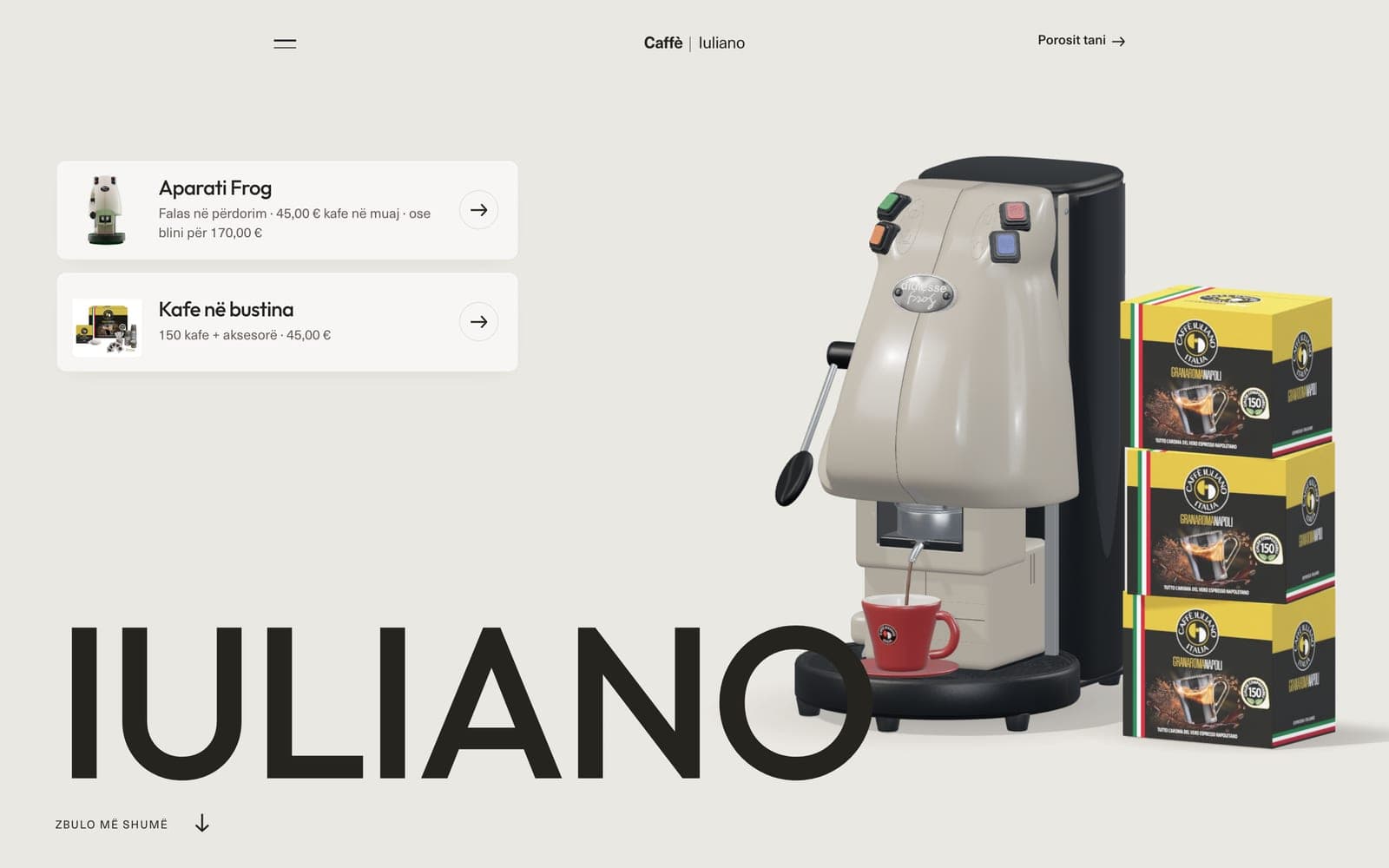
The Frog that pours an espresso on caffeiuliano-ks.com is not a photo or a stock file. We rebuilt it in Blender from the product photographs, part by part, and the same model now runs live on the homepage and poses for studio renders.
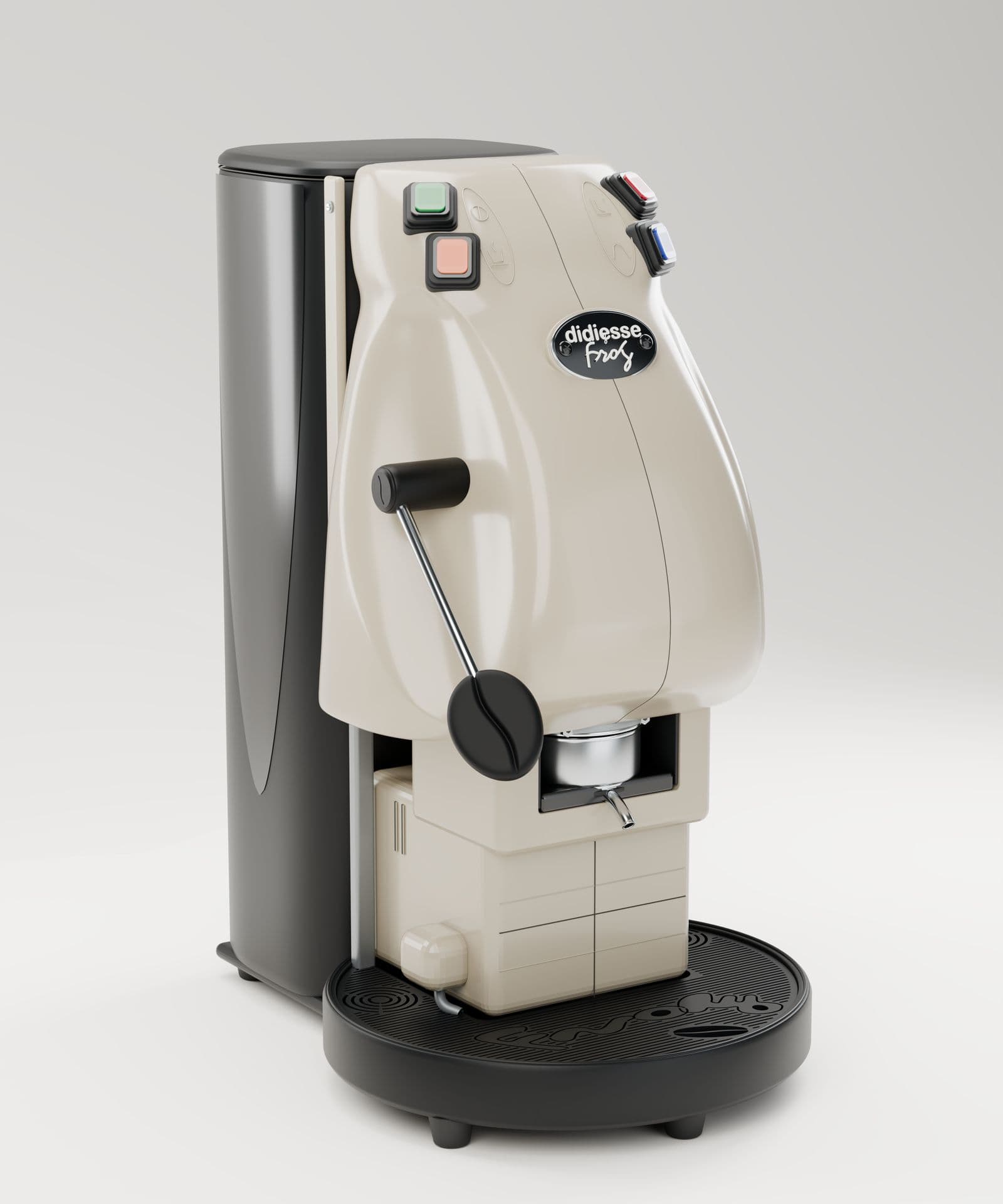
Caffè Iuliano sells the Didiesse Frog espresso machine in Kosovo. We modelled it in Blender from product photographs: 282 separate objects, built to scale and checked view by view against the photos. A 1.8 MB web version runs live on the store's homepage in three.js, and the full model renders studio stills at 3000 × 3600 pixels.
We started from the product photographs, not from a manufacturer's file: the front, both three-quarter views and a handful of close-ups. Every part of the Frog is modelled on its own in Blender: the split bonnet, the tall tank, the lever, the drip tray and the four switches, built to scale at about 22 × 32 × 40 cm.
The whole model is generated by a script, so any revision can be rebuilt from scratch and compared with the photos from the same fixed cameras. The back and the underside never appear in the photos, so those parts are our best reading of the machine.
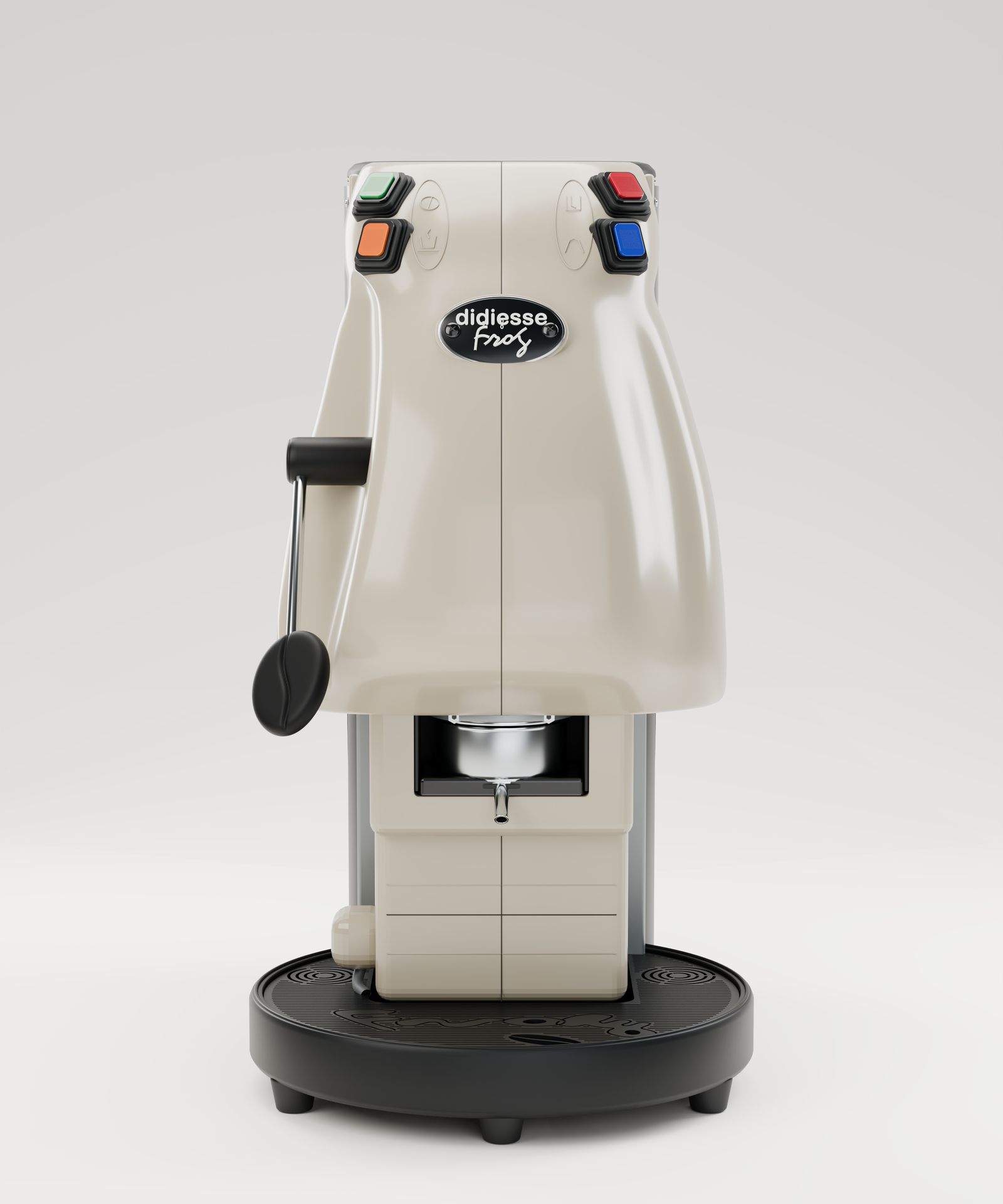
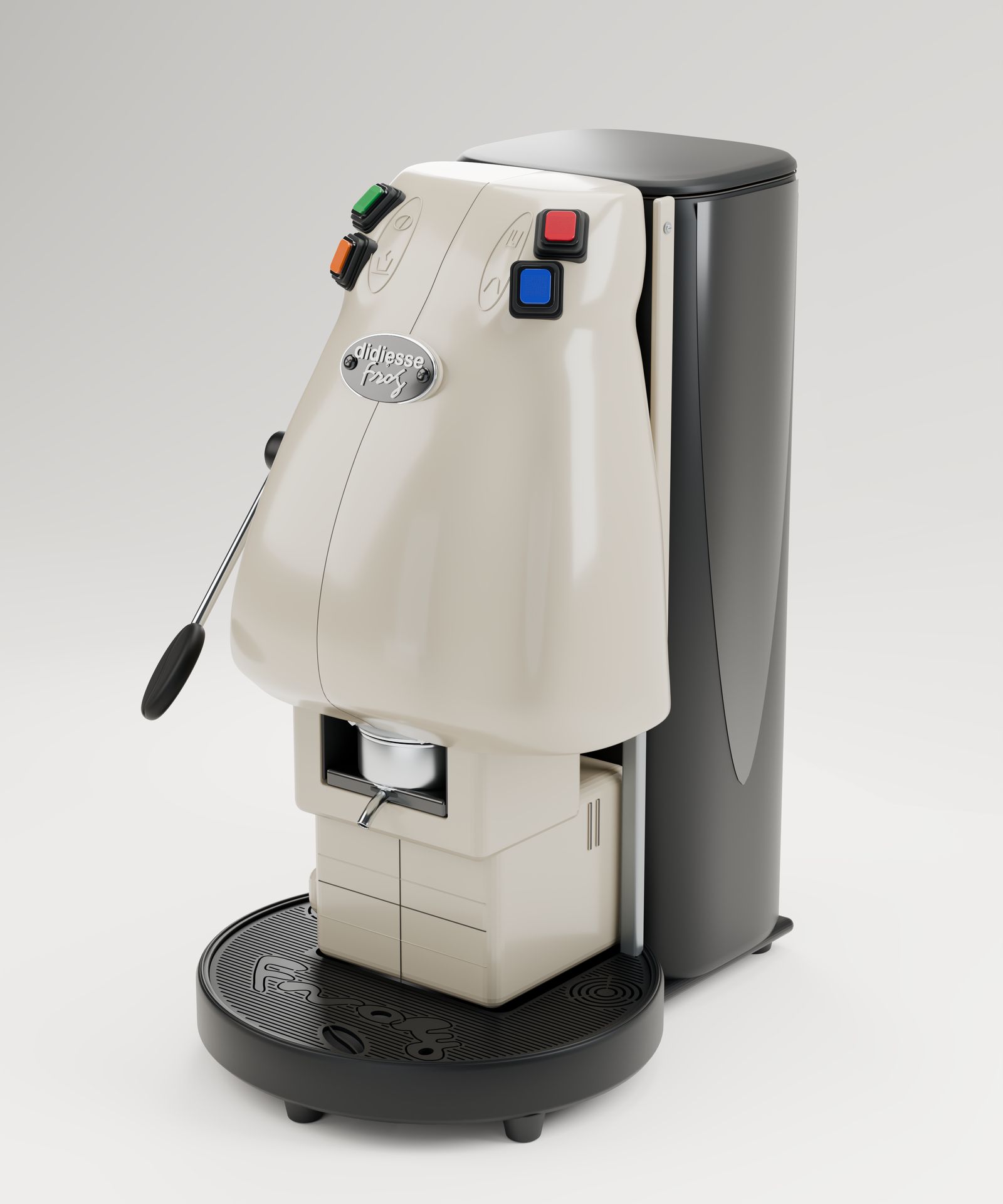
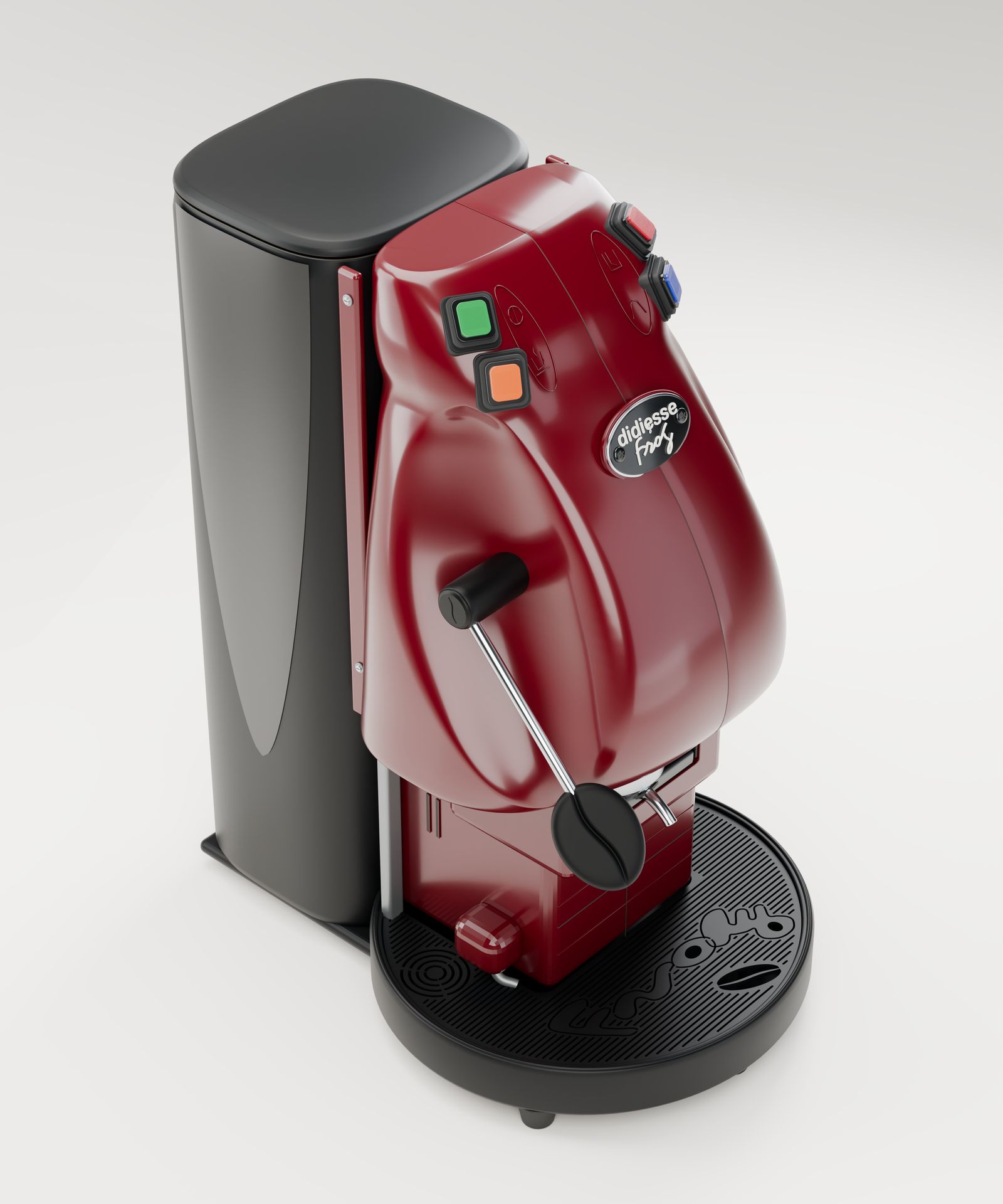
A machine this familiar gives itself away in the small parts, so that is where most of the work went. Whenever a closer photo arrived, the model changed with it.
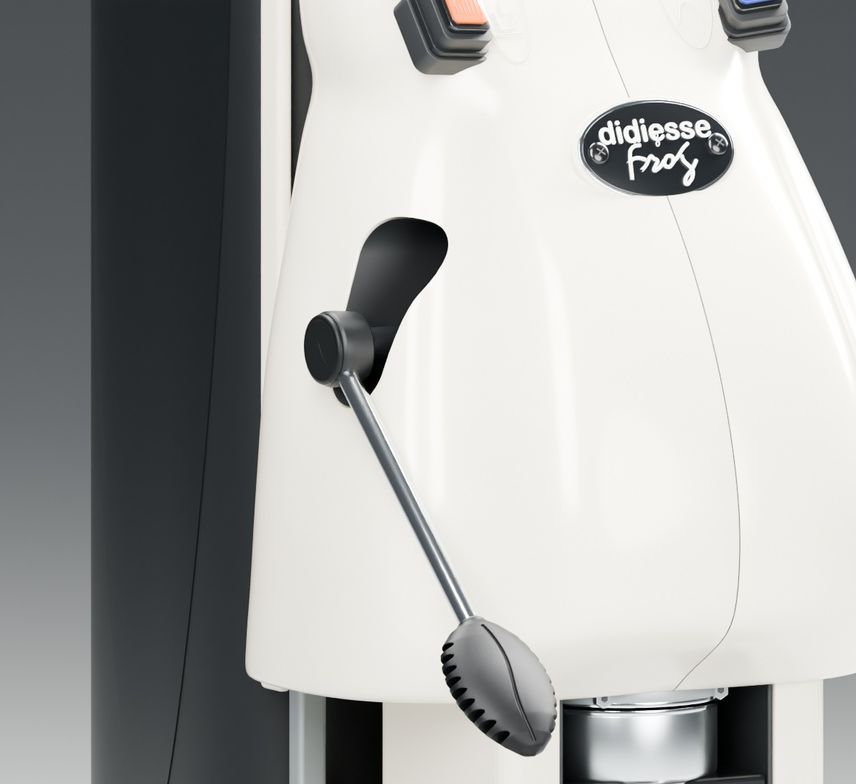
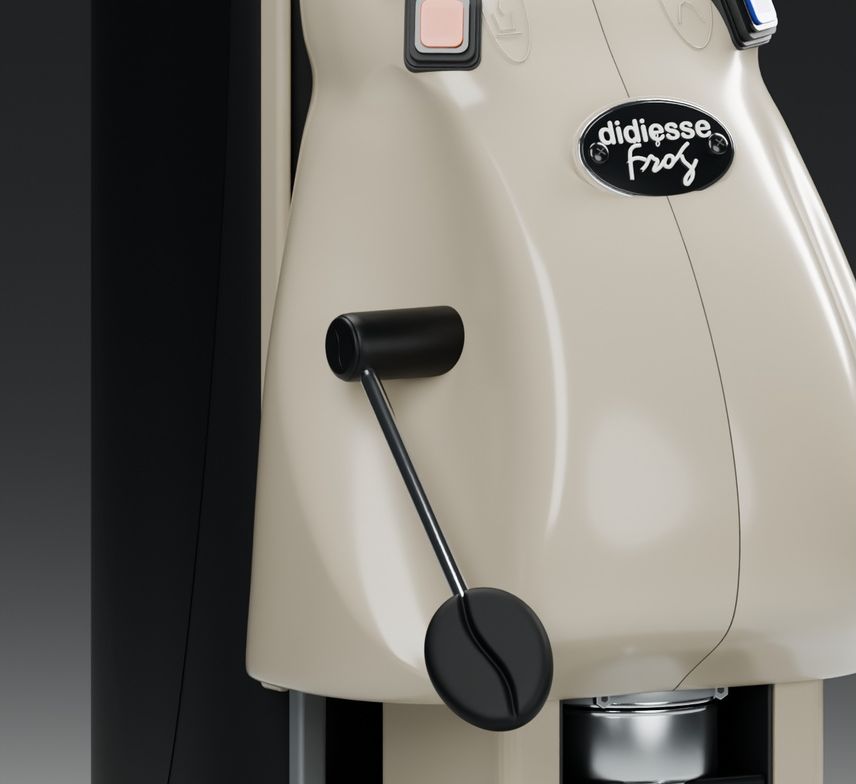
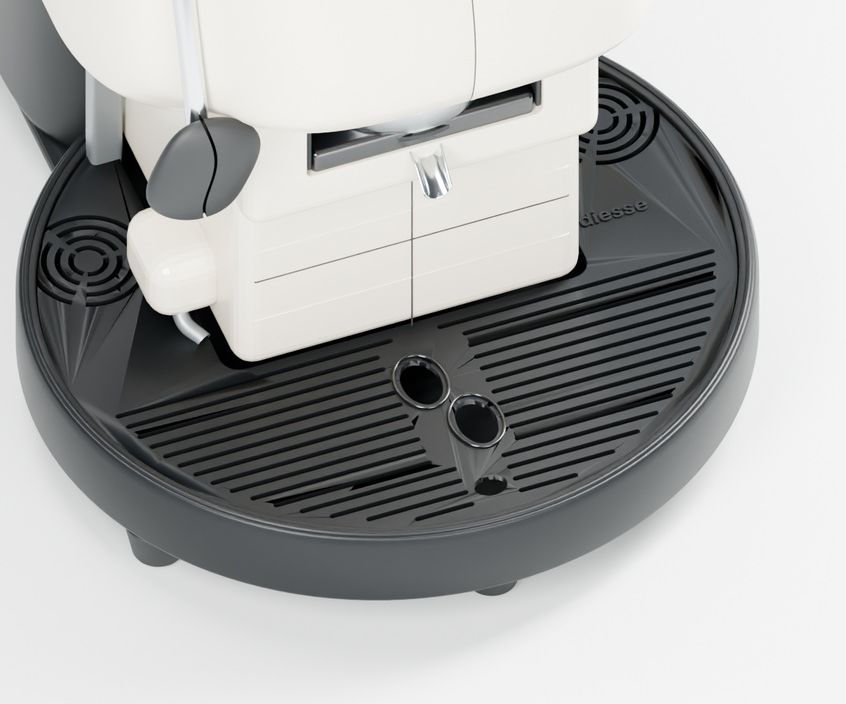
The store is warm and quiet: cream pages, dark type and the machine as the one bright object. It is drawn on a transparent layer, so the page itself becomes the studio floor, lit like a product shoot with soft reflections and a shadow that fades out under the base.
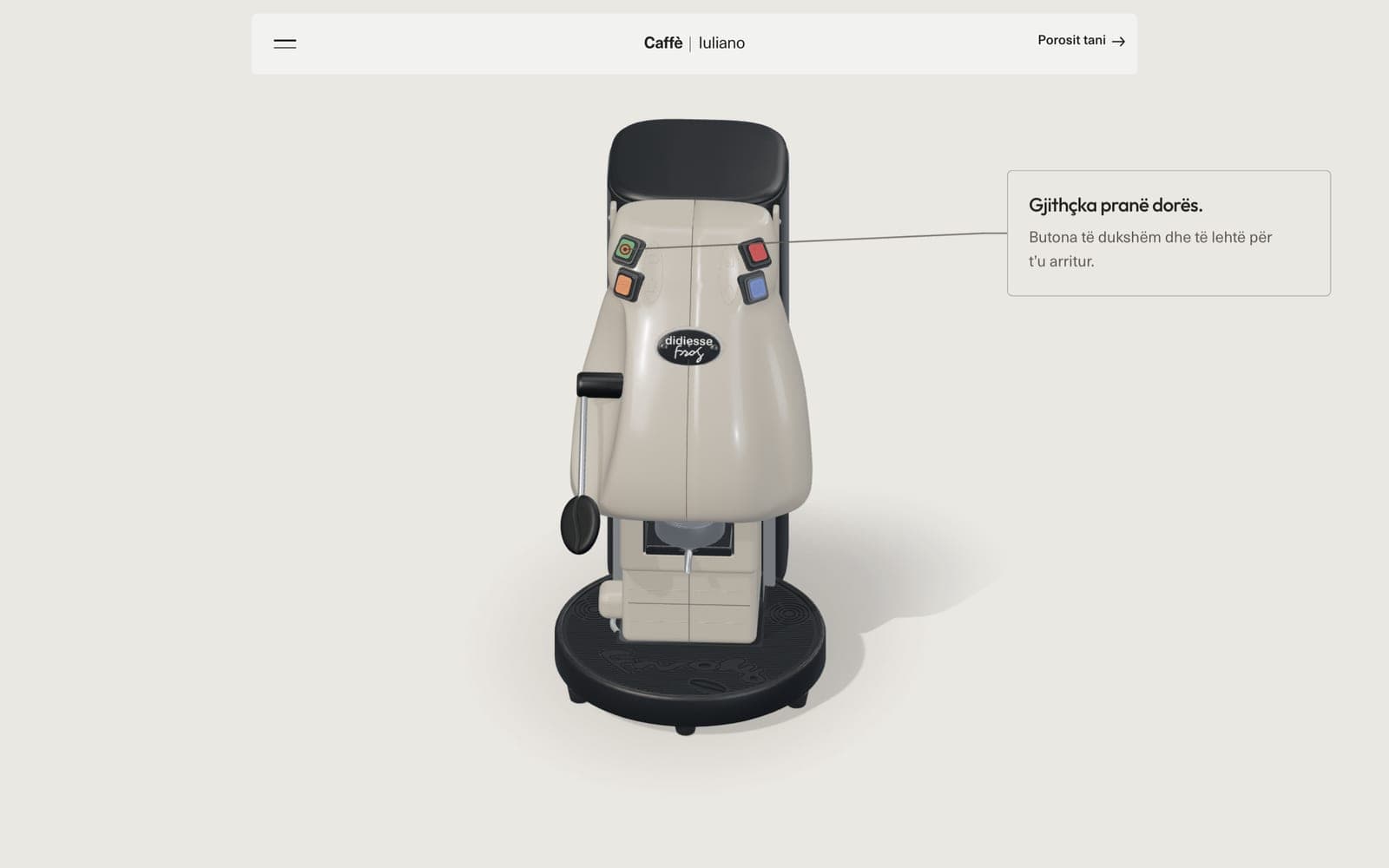
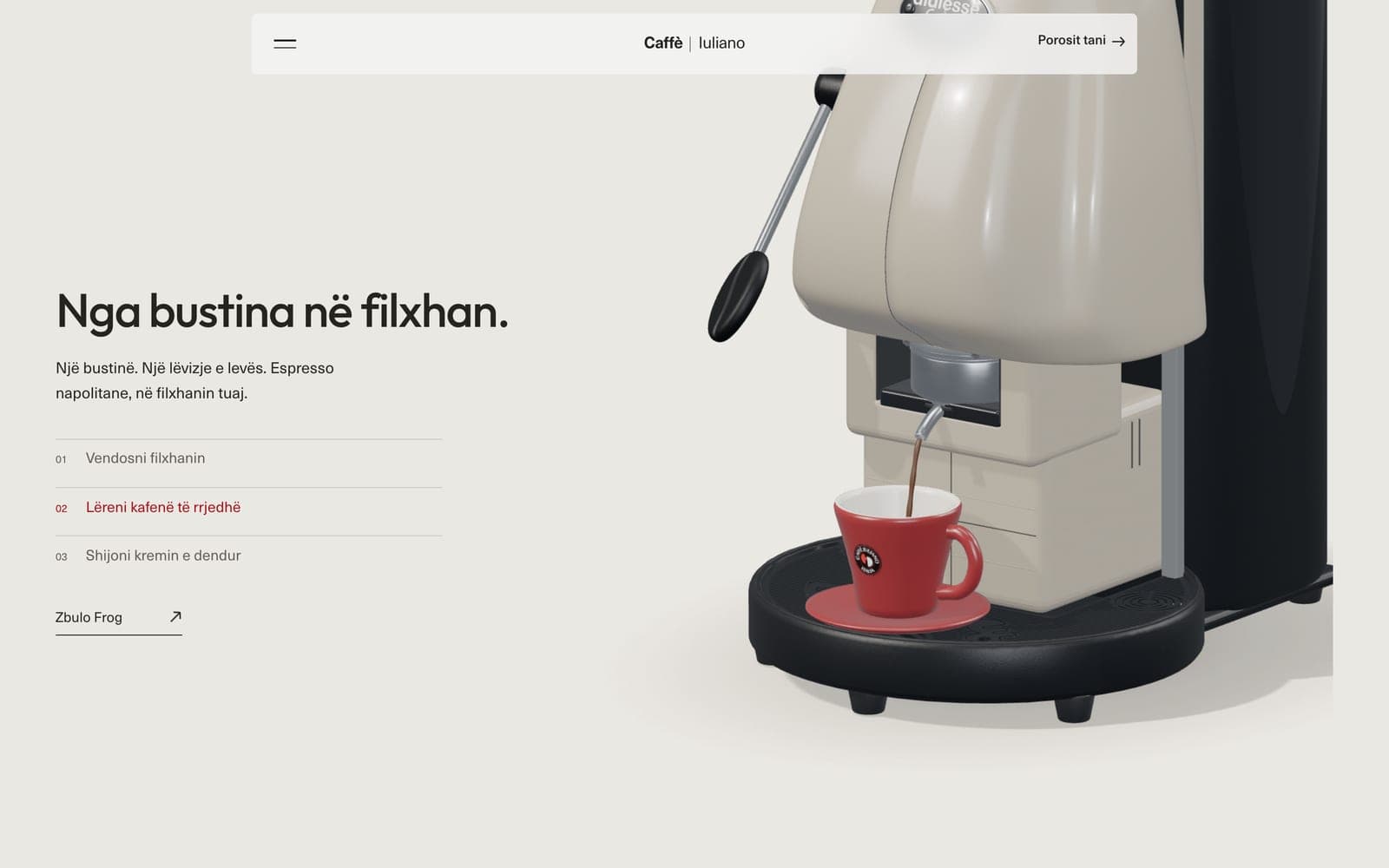
As you scroll, the same machine travels with you: it glides in and pours an espresso, turns to show its parts with notes pinned to them, lines up in three colours and fills a cup up close. The model downloads once and draws on a single canvas. Phones get a larger machine and a turning camera, and visitors who prefer less motion get still images.
Once the page has loaded, the machine glides in from the right, settles and pours one espresso on its own.
Notes are real text laid over the 3D view, each tied to its part by a thin line.
A pinned close-up: the coffee pours and the crema rises as you scroll, in three steps.
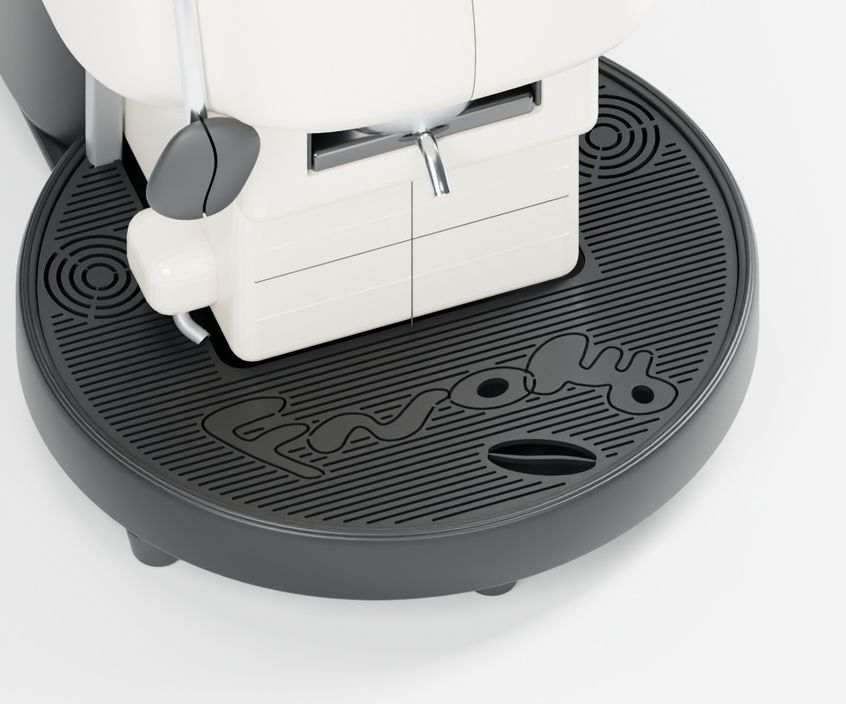
For the stills we built a photo studio around the finished model without changing it: six lights on the machine, a seventh on the curved backdrop, 85 mm cameras and Cycles, Blender's path-tracing renderer. Each master is 3000 × 3600 pixels and sharp from front to back.
Ivory, ruby red and piano black share one geometry and differ only in the shell material. That is why the store switches colours without loading a second machine, and why a new angle or colour is a render, not a photo shoot.
| Blender master | Web model | |
|---|---|---|
| Objects | 282 objects | 28 meshes |
| Triangles | 624,172 | 405,401 |
| File | Blender project, 22 MB | glTF with Draco, 1.8 MB |
| Used for | Studio renders, 3000 × 3600 | The live homepage, in three.js |
Yes. Send clear photos from the front, both sides and the three-quarter angles, plus close-ups of any detail that matters. We model it, show you renders to approve, and only then put it on your site.
Not when it is built for the web. The Caffè Iuliano homepage downloads one 1.8 MB model once, draws it on a single canvas and only redraws when something moves. On a device that cannot run it, the page shows still images instead.
Yes. The same master renders print-size stills from any angle and in any of its colours, like the ones on this page, without a photo shoot.
For a product like the Frog, a few days of modelling plus revisions as new photos come in, then the work on the site itself. The timeline is written into the quote.
Pluton Studio, a software studio in Prishtina, Kosovo: websites, online stores and custom software. The Caffè Iuliano store and its 3D machine went live in 2026.
Tell us a little about your idea or business and we'll reply with a plan and a quote, no obligation.